By Josie Simpson
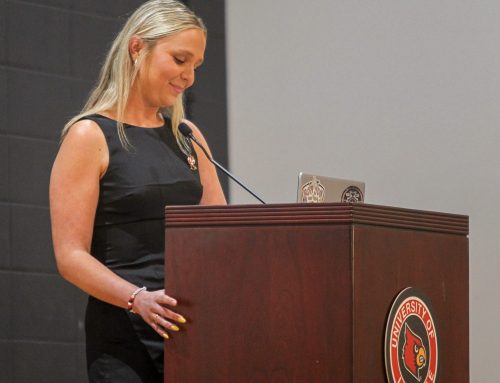
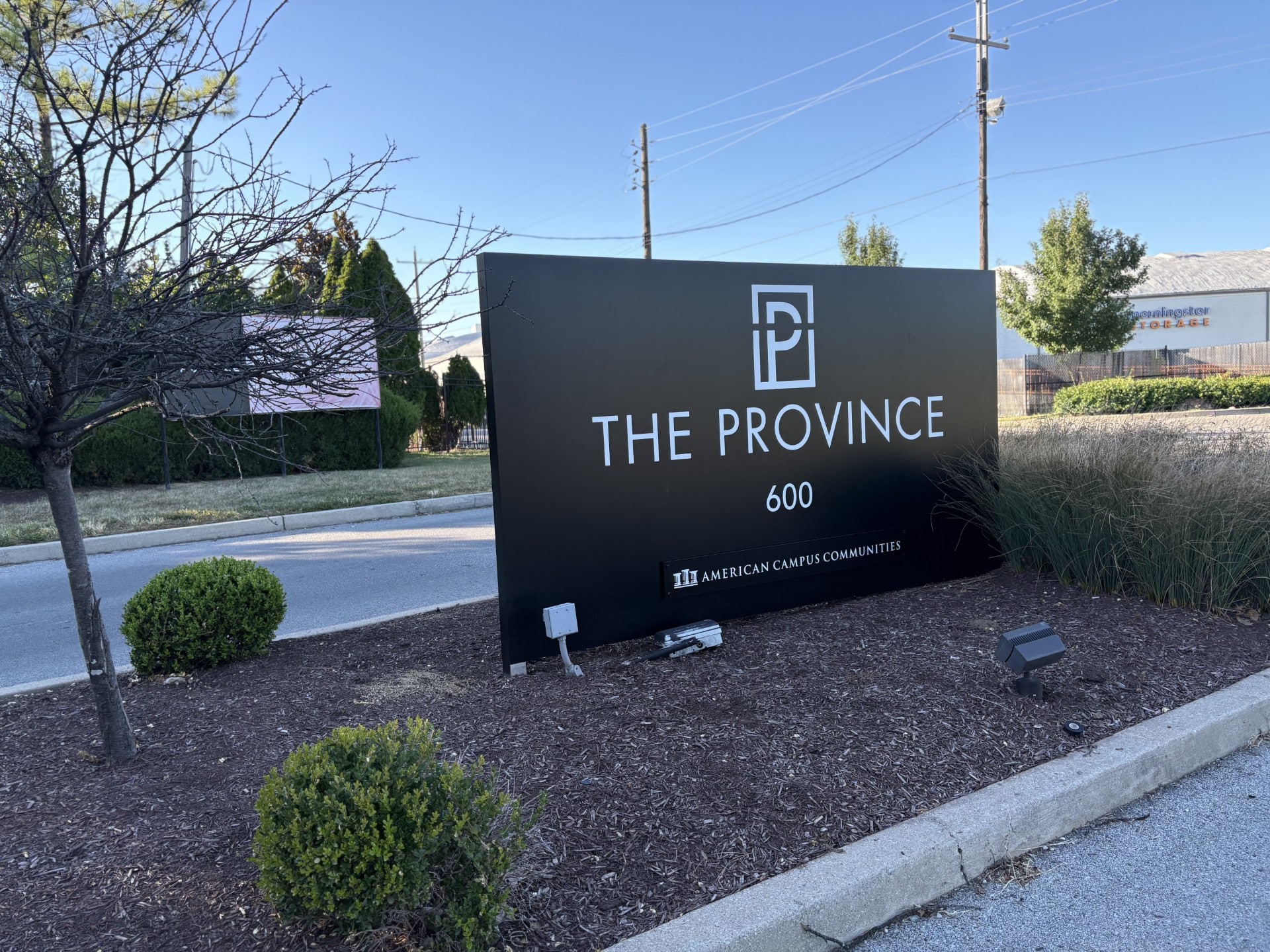
On Feb. 9, the Executive Director of University of Louisville Housing, Tom Hardy, discussed U of L’s recent partnership with The Province. Students have raised concerns about potential price increases, existing lease agreements and what the property will look like under U of L’s control.
Addressing the housing demand
In Fall 2025, U of L saw another year of record-breaking enrollment, and its housing occupancy reached 102%.
Hardy said the university did not have concrete plans to acquire The Province until Summer 2025. This is when U of L began exploring master lease options and new affiliation agreements to address the increasing housing demand.
After issuing a Request For Proposals–a document inviting suppliers or contractors to submit business proposals–both The Province and The Marshall responded. After that, U of L decided to move forward with an affiliation agreement with The Marshall and a master lease with The Province.
Under a master lease, the university takes responsibility for rent collection and resident management. This is the same agreement U of L has with University Pointe and Cardinal Towne. The Province will still be owned by a California company called Ideal and managed by Greystar.
What’s changing?
There are no renovation plans for The Province during the roughly two-week period between current tenants moving out and new tenants moving in.
“Maintenance will remain Greystar’s responsibility,” Hardy said. “We will run the facility, excluding maintenance.”
Another point of concern involved residents who are not U of L students. Around 12% of current residents fall into that category. Hardy said all non-U of L tenants have been notified and are making alternative housing arrangements.
The new agreement faced backlash from residents who already signed leases at lower monthly rates. Hardy said that once U of L learned that some leases were fully executed, the university reached out to honor those agreements case-by-case.
He added that some leases were only partially executed, meaning residents signed, but Greystar had not countersigned. Even in those cases, U of L contacted residents to discuss possible solutions.
A recent opinion article published by The Cardinal revealed that Greystar’s lease termination documents included a clause restricting residents from speaking or writing negatively about the company. Hardy affirmed that the university was not aware of this language. He stated that Greystar and Ideal did not clear it with U of L.

An excerpt from the lease termination paperwork sent by Greystar Real Estate Partners to Kylie Strehl. (Image Provided / Kylie Strehl)
Before U of L’s acquisition, The Province’s rent prices were lower. Monthly rent for a four bed and bath unit costed $664; the same unit is $799 under U of L Housing. Students who wish to pay every semester for this unit would spend $10,176 for two semesters. This breaks down to $848 monthly.
Rent at The Province already includes trash, internet, water and a $30 utilities allowance.
According to Hardy, the $135 rent increase reflects added operational costs, including enhanced police presence and staffing support. The university plans to place 17 resident assistants throughout the complex. The increased staffing is largely due to The Province’s exterior-style layout.
Housing policies will align with those at University Pointe and Cardinal Towne.
Preserving time and costs
Last February, the university announced its purchase of the Cardinal Center, the parking lot on 4th Street and Brandeis Avenue. Though U of L is undecided on its long-term use, housing has been a top consideration for the lot.

Parking signs located in the parking lot on 4th Street and Brandeis Avenue, Aug. 28, 2025. U of L bought the Cardinal Center in January 2025 and replaced it with the lot later in August. (Photo by Jai’Michael Anderson / The Louisville Cardinal)
Out-of-date residence halls like University Tower Apartments and Unitas are other potential locations for new residence halls.
Hardy said the decision to pursue alternative housing options ultimately came down to time and cost.
“We needed something that could be ready for fall 2026,” Hardy said.
The two-year master lease is intended to provide flexibility. By 2028, U of L will assess the agreement’s success and will have a more concrete plan for the future of the Cardinal Center property.
Photo by Roxy Osborne / The Louisville Cardinal