 By
By
An atmosphere of racial intolerance has washed over the University of Louisville. Tides of accusation have been inevitably followed by blame and denial, yet at the heart of the issue are those who deny that any race problem exists. The truth of the matter is that there is a problem, and yes, it is a black and white thing. If this isn’t complicated enough, political elements run strong throughout and stymie attempts at resolution.
The clearest manifestation of the race problem is in the Student Activity Center. At the peak of the lunch hour (if anyone noticed), there seems to be an apartheid in place. But, strangely, there are no police enforcing this racial segregation. Students have voluntarily established their own color line, stark and seemingly impenetrable. Blacks sit on the left side, white fraternity members sit on the right, with representatives of the goth community lingering on the outskirts. What does this reflect?
Perhaps this racial alienation is a sign that true diversity is elusive and difficult to implement through a catch phrase. Diversity is about stepping out of comfort zones to find the individual. It is about realizing that yes, race does matter. It has been said that people should be viewed without regard to skin color, but the truth is that race is an integral part of who we are. Race is always a factor in one’s culture and community, and pride in it is essential to maintaining identity, especially for members of a minority group. White pride is already subconsciously enforced by society; Blacks need pride just to make it through the day.
The challenge we all face is to balance the pride factor with a willingness to reach beyond what we know. So often, a Greek will surround him/herself with Greeks, knowing that he/she is a part of something larger: a fraternity/sorority unit. So often, a member of the black community will surround him/herself with their own element for security. This is natural. We surround ourselves with those whom share our common experience.
The problem arises when this association with our nucleus creates a protectionist atmosphere. We then become blind to issues that surround the other.
Let’s take a look at our administration. Many blacks have repeatedly challenged the University for its ignorance to racial issues. The ramifications of injustices such as the 1998 Porter Scholar debacle, the 2001 TKE blackface incident, and the many DPS grievances that never reach the front page, have never been thoroughly dealt with. Needless to say, any notion of reparations to the black community is anathema. The University has sugar coated the issue with funding for an Assistant Provost for Diversity and a Fire Marshall, who is black. What an effort by those in power. We can call ourselves the rainbow coalition now!
These strides are all well and good, but will this really bring together the student body? Will two hour sessions on diversity be all that we need to harmonize? The TKE fraternity is a prime example of the mentality among the white community, and it requires more than a seminar to open minds. Very few whites on campus are overt racists and most want an open campus. However, by growing up in a Caucasian community, many find the transition to an urban campus to be a definite culture shock. The lack of preparation to encounter “the other” has led some to destructive avenues. Avoidance and denial have led many to give up any attempt to bridge the racial divide.
The current SGA election campaign has ripped open the racial sores yet again. Candidates are either for white students or black students, and any attempts to represent the whole are met with distrust. White students, as a whole, believe that Jihaad will not represent them. Black students, as a whole, believe that neither Jay Elmore, Chris Marlin, nor Heather Sarne will care abut their issues. The Louisville Cardinal editorial board felt likewise when they did not endorse a single black candidate for the SGA executive committee. Yet, some argue that the climate at U of L is indeed diverse. Some have gone so far as to have deny that there is any divide at all.
But with an all white SGA senate, an all black SGA executive committee, an all white Cardinal editorial board, an all black Pan-African studies department, a mostly white professorship, and all white university leadership (with a token exception or two), take a wild guess how integrated the student body can be. With these examples being set, it is no wonder that the SAC lunchroom reflects the overall environment. I dare the university tour guides to escort the high school seniors who “Dare to be Great” into the lunch area to show them just how great they can be, in their respective sitting areas.
Unfortunately, there can be no compromise with diversity. It has never been overrated and has never been fully realized. It is a goal that will not be reached through an overhead projector or political rhetoric, but rather across a booth at a bar over a few beers (or coffee). We can take this slowly. Put down the paper. Take that step. Walk to the next table. Say hello.
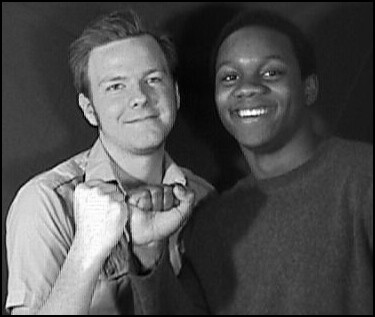
Joseph Gethers is a freshman communications major, president of the U of L Association of Black students, member of LEAD, and SGA senate candidate. Chaz Martin is a senior history major and opinion editor for The Cardinal. opinioneditor@louisvillecardinal.com.