By Haley O’Shaughnessy
Sometime during the Louisville/Florida State halftime, between the bustle of fans running to the concessions and standing in bathroom lines, a voice and image on the giant video screens blasted out a vital message.
“I will not leave my friend alone at a party.”
“I will not leave my drunk friend with his/her ex.”
“I will know when a girl is too drunk to consent.”
Athletes, from football players to women’s basketball stars, stated ethical and specific pledges throughout the video to do the right thing.
Louisville chose to make a proactive statement during a game and against an opponent who had infamously failed to do so. The message suggests an aggressive approach to making sure what happened at Florida St. does not repeat itself at Louisville.
The failings of Florida State’s administration in regards to athletics have arguably focused more attention off the field than what the defending national champions, who are still undefeated, have done on it.
Crab costumes littered Louisville’s student section, mocking Winston’s citation in May for stealing crab legs. Thankfully, only one or two distasteful references could be heard about his sexual assault allegations.
Florida State coach Jimbo Fisher has defended his players with unflinching support. But behind the scenes at Florida State, a different picture is beginning to emerge. The school continues a Title IX investigation into Winston. And recently, FSU running back Karlos Williams’ girlfriend posted unsettling pictures of herself with bruises to Facebook.
Jeff Levine, lawyer and Legal Aspects of Sport lecturer at Louisville, said that the bigger problem is in administration, not just athletics.
“Certainly there has been a trend, and this is not new, of willful negligence,” Levine said. “We look at what laws, not policies in terms of rulebooks, but laws, govern someone’s duty of care. Regardless of the semantics, if you don’t have administrators or an individual doing what’s right — and what’s right is reporting [a crime], not protecting someone just because he plays football — that’s symptomatic of a societal issue.”
Administrations cannot control students from doing wrong; they can only control how they prepare for it, how they handle it, and how they report it. Louisville’s Dean of Students, Mike Mardis, explained how violations of the student code of conduct are handled:
“In the cases of serious violations, we have hearings. Those hearing boards are made up of students, faculty and staff. It’s a good representation. They make recommendations of whether someone violated the student code of conduct, and make recommendations of what that sanctioning should be.”
Although Mardis said there was no disparity in policy between students and student-athletes, he did acknowledge that student-athletes often face more exposure when going through the process.
Christine Simatacolos, the Associate Athletic Director for student life at Louisville, said that student-athletes are actually held more accountable for their actions at Louisville because of the preventative regulations.
“Student athletes are held much more accountable on many levels because they have to abide by NCAA rules and regulations,” she said. “Conferences sometimes have additional rules and regulations. We [Louisville] also have added rules sitting on top of the overall student conduct code.”
All of these rules and regulations can be filed under prevention. Levine sees this as the only way to avoid scandals like the ones still facing Thursday night’s opponent.
“Certainly if any entity is proactive, that is preferred to being reactive, because then you have policies in place,” he said. “You have training in place, and you are prepared to deal with an issue, hopefully before it becomes an issue. And certainly if an issue does come to light, and it most certainly will, you’re in position to really abide by your duty of care or maintain a legally defensible position.”
Staying current and aware with issues that face campuses is an encouraging step for Louisville’s athletic department, and the institution as a whole. Making a video with athletes taking a stand against sexual assault is a small, ethical step. Featuring that video during the biggest game of the season is another. Featuring that video against a quarterback accused of the very crime, well, that is just bold, and perhaps, says all that needs to be said about how seriously Louisville takes being proactive on the issue.
The Seminoles took the comeback Thursday night on the field, but Louisville is still aiming to be a frontrunner off of it.
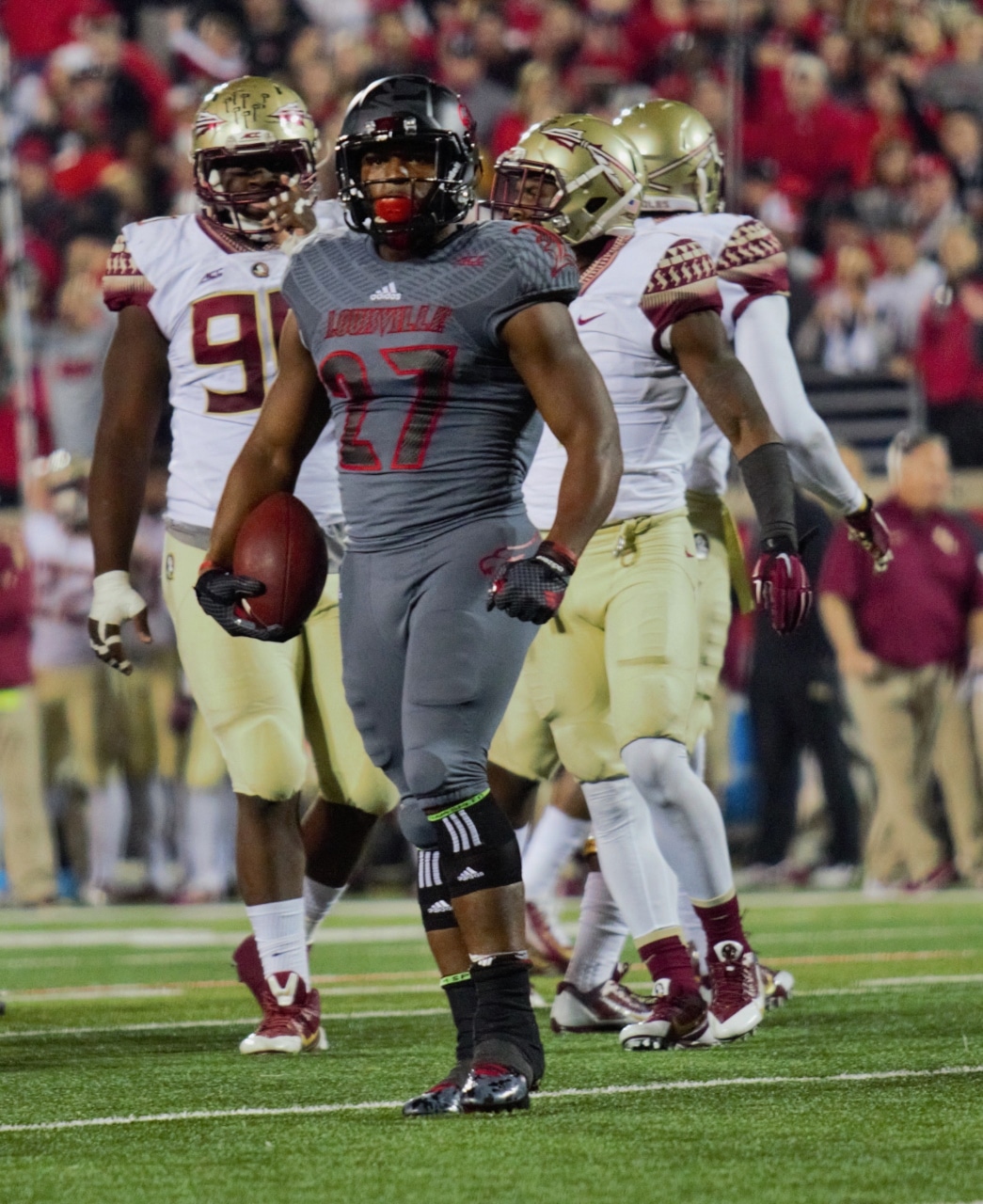
Photo by Laurel Slaughter / The Louisville Cardinal