 By Deandra Hoppe
When you ascend the stairs of the J.B. Speed Art Museum to the upper gallery, you will come across many interesting works of art. If you go to the left, in a secluded corner, almost a world by itself, you will find an exhibit put together from Murray State University graduate and local artist Stephen Irwin (and no, not the crocodile hunter).
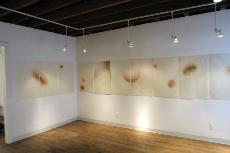
The first impression a viewer gets from the work is that it is a room full of about thirty sheets of paper, called sekishu, with cuts and bruises on it; however, that is only the beginning of the idea behind the piece. The walls start to take on an embracive quality that leaves the observer feeling secure and contemplative.
The artist says he first found inspiration for this piece from a photograph of a woman with a huge bruise on her thigh. He could not tell if the woman had an expression of love or hurt on her face. This made him think about how our own bruises affect us both physically and spiritually. His experiences in the hospital and various surgeries he had to undergo intensified his fascination with the bodyís ability to recover.
“Not everything can be soft and pretty,”said Irwin in an interview with Julian Robson, curator at the museum. Everyone can identify with being hurt at one point in his or her lives, and it was not always pretty. They can look at a particular bruise and remember falling off their bike for the first time, and subsequently how they learned how to ride correctly. Another may remind someone of the time they were not looking and ran into a wall and it left a gash. The piece evokes different emotions for each individual.
The longer you look at all the different pieces hanging on the walls, the more they look like constellations. The observer rises above the impressions pain leaves on the body both spiritually and physically, realizing that everyone goes through pain. The room seems to breathe on its own as the pieces that have been pierced from the top most corners only sway away from the walls.
The exhibit is a great place to go and think, to identify with how your life has shaped up until now and realize what you have overcome in order to be where you are today. The installation will remain in the upper gallery until Feb. 4 of this year.