 By
By
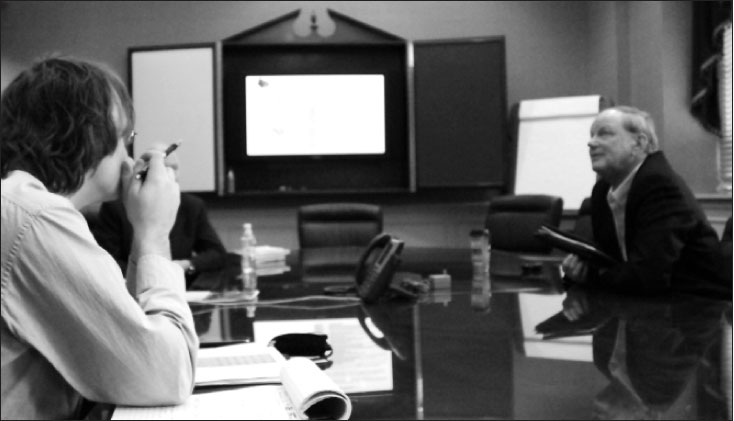
Recently, members of the editorial board of The Louisville Cardinal sat down with University of Louisville President Dr. James R. Ramsey. In the meeting, it was revealed the smoking ban’s full implementation has been pushed back to November 2010, from June. The following are excerpts from that meeting.
Once the smoking ban is enacted, could students smoke on sidewalks around campus that are not owned by the University of Louisville?
We can’t control public spaces. We did the smoking ban downtown first, at the Health Science Campus, and we have had people go out to public spaces and smoke…
I fully support the smoking ban. It’s the right thing to do. There are problems, there’s no question. Not everyone likes it. There are enforcement problems, but Dr. Willihnganz and the campus community have tried to work through those issues.
How will you enforce the smoking ban?
I don’t think they’ve decided…These are tough issues. There will always be some people that want to smoke…You can’t let the enforcement become a bigger cost than the benefits from it. You’ve got to work from a practical perspective.
What is the university doing to improve freshmen retention?
We’ve come a long way, and the data shows that… Ultimately, the goal is to get people to graduate. We’re making progress, and I would say there are five or six things we’re doing.
#1 Recruiting better students. We admitted a lot of students into the University of Louisville when we were open enrollment who were not ready to do college work. And that’s, in my view, not being fair to those students. And so that’s why our partnership with the community college is so important. And the remedial education programs at JCTC are important.
#2 The Provost has reworked academic support through the REACH program and through the sophomore mentoring program…so improved academic support.
#3 Improved advising. Improving and emphasizing the advising process to work with students.
#4 Improving career counseling services to help students, not only at the end of their college career get placement, but throughout their college career, so that the student stays engaged.
#5 The whole campus life. Research is pretty clear that the more engaged students are on campus, the more likely their opportunity of being successful. We’ve always had Greek life, we’ve always had intramurals, we have 250 or so RSOs. We’ve tried to improve the atmosphere on campus: the library study areas, coffee shops, better food services, longer hours, more attractive campus setting, more residence life. When we started we had 9 percent of our students living on campus; today we have 24 percent.
#6 One of the biggest factors in people falling by the wayside is money. We started a fund, and it is for returning students only. It’s a need-based fund. If a student says ‘I can’t come back to school because of financial reasons,’ we’ve created a special pot of money to help those students. But cost is a big factor, and it’s not just tuition costs. The biggest cost of going to college is your opportunity cost—what you’re giving up to be here.
So we’ve tried to address each of those issues. Based on the data we’ve seen, we think we’re making progress.
How do you balance research with the academics of undergraduate students?
We all, as faculty, have to be engaged in scholarship and research, in my view, to be successful in the classroom, and to remain current in our academic disciplines. Our faculty, all faculty, is evaluated on their teaching skills, their research skills and their service.
I think the focus on being a nationally-recognized research university and being a great undergraduate institution are one and the same. I do not think these are incompatible. I think you can go overboard on anything: athletics as opposed to academics, undergraduate education as opposed to graduate education. I think the research focus brings us stature and helps us recruit better students.
The focus on funded research allows us to recruit more faculty, and faculty of prestige. I really think that these things complement each other.
I think one of the problems we have is that sometimes, without question, when we ask people out in the state what they think of when they think about the University of Louisville, they think of athletics, and secondly, medicine. So I think you do have a little of the Belknap Campus vs. the Health Science Campus…But the research gets a lot of play, because when one of our faculty discovers Gardasil, the only FDA-approved cancer vaccine on the market, that’s newsworthy. But a lot of things we do with undergraduate education it’s hard to get on the front page of The Courier-Journal.
Do you think you have a good balance of that right now?
I think so. I think it’s something you’ve always got to work on. One of our strategies to build funded research was to hire 20 new research-faculty each year. Every year I’ve been here, up until last year, we were budgeting for 20 new research-faculty. We haven’t been able to do that in the last two years. If anything, there are some on campus who would tell you we’re not putting enough emphasis on the funded research, as we are some of our undergraduate initiatives.