 By Michael Kennedy
As a friend tells it, he and Taylor Cavanaugh were drinking whiskey in a dorm room in Miller Hall, an alcohol-free residence hall. Suddenly they heard on a knock on the door. It was the resident assistant; she had caught them drinking. Rather than pour it out, she left with the alcohol. Cavanaugh was upset and asked for the whiskey back on the R.A.’s Facebook page. He was then reported to the university, and now he is listed as a persona non grata.
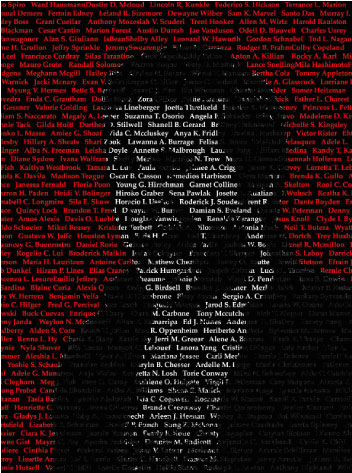
There are 772 individuals considered personae non gratae, or unwelcome persons, to the University of Louisville. The list is maintained by the Dean of Students Office, and individuals may be placed on this list for number of reasons.
“The incidents can include, but are not limited to, the following: criminal charges, violation of restraining orders, stalking, violation of university policies, and failure to comply with the direction of a university official acting in the performance of their duties,” said Dean of Students Michael Mardis.
According to Mardis, it’s easy to discipline students, through the Code of Student Conduct or academic departments. Faculty and staff can be disciplined through Human Resources. When outsiders break the rules, the only solution the university has is to ban them.
To be sure, students may still make the list. A student who has received a disciplinary dismissal is eligible to re-enroll at U of L after a set period of time. At this time, they will no longer be a PNG. However, a student who has received a disciplinary expulsion is considered a PNG indefinitely.
According to Mardis, an information report is sent to Assistant Dean of Students Michelle Clemons from a department, faculty or staff member, or the dean of students. These information reports could include a police report or a restraining order. Clemons reviews information in the report and places the individual on the list of personae non gratae if needed.
At this point, a letter is sent to the individual, informing them they are not allowed on campus.
The letter states, “Be aware that, if you are found on university premises, the University Police will be called and you will be arrested for criminal trespass.”
Individuals may appeal the ruling by filling out an online form, which asks for their specific reason for requesting access to campus. The appeal goes to the Student Care Team, a board of 10 representatives meant to act as a cross-section of the university community. If the appeal is denied, the individual must wait a year before filing another appeal.
Mark Hebert, U of L spokesman, said, “To be clear, these people do have a way to appeal and to contact the university and say ‘I think I’m being punished too hard for my transgression’ or ‘This happened 10, 15 years ago, when I was a student at U of L. I’d like to be taken off the list because now I’m an upstanding citizen. That was something really dumb as a student.'”
The list gained attention in August when Thomas H. Irwin, former student and adjunct professor at U of L, walked into the Law Library carrying two guns and 53 rounds of ammunition. A staff member at the library spotted Irwin, realized that he was not allowed on campus, and called police, according to University Police Major Kenny Brown.
Provost Shirley Willihnganz said that Irwin had been named a persona non grata in December 2008, after he allegedly harassed a fellow employee. Irwin was subsequently charged with carrying a concealed deadly weapon and criminal trespass.
Irwin declined to comment for this article.
According to Mardis, a PNG may not set foot on any University of Louisville property, or attend any university-sponsored events. This includes sporting events. If a PNG is detained by campus police and unaware of their designation as a PNG, university police may hand them documentation of it, and it is at their discretion whether to cite the PNG for criminal trespass.
Brian Ray contributed to this article.