 By Lee Cole
Loretta Lynn has become synonymous in many ways with a bygone era of country western music. Her songs have become embedded in Americana so deeply that it is difficult to separate them from their familiar place in pop culture and evaluate them not just as sing-along hits but as serious, well-crafted songs. It is easy to forget just how controversial her songs were, like “Rated ‘X,'” which spoke frankly of the double standard women faced when it came to divorce. It is also easy to forget just how poignant her music was, as in “Coal Miner’s Daughter,” a retelling of Lynn’s childhood in Butcher Holler.
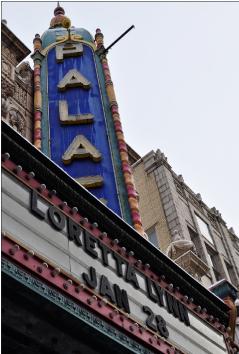
A native Kentuckian, Lynn will be visiting her home state on Jan. 28 to play at The Louisville Palace. Her current tour follows the 2010 release of an album of her most famous songs covered by contemporary artists. Being a fan of Lynn, I was excited at the prospect of modern performers trying out their own versions of her classics, and decided to review it in anticipation of her upcoming show.
As I listened to the album, called “Coal Miner’s Daughter: A Tribute to Loretta Lynn,” it only made me realize just how far we have come from that bygone era that Lynn represents so well. Country western music has changed dramatically since the ‘60s and ‘70s. The performers on the album were talented and the covers themselves were mostly good, with the exception of a few. But the album really highlighted the sharp contrast between contemporary country music, with its high production value and hackneyed themes, and the simple, straightforward sound of Lynn’s early albums.
Lynn needed very little accompaniment other than a guitar, banjo, bass and the low whine of a pedal steel guitar. Her voice itself – rich and brassy – was instrument enough. And there are very few modern performers who can replicate it. Still, the artists all seemed to at least have a keen appreciation for Lynn’s music. “Rated ‘X'” was covered quite well by The White Stripes, and Reba McEntire’s rendition of “If You’re Not Gone Too Long,” with The Time Jumpers, was also a highlight. My favorite, however, was Lucinda Williams’ beautiful cover of “Somebody Somewhere (Don’t Know What He’s Missin’ Tonight).” Williams’ vocals approached, perhaps better than any of the album’s other performers, the earthy, sighing quality of Lynn’s voice.
Of course, none of these covers can compare to the real thing. They cannot take the listener back to Butcher Holler and the coal country around Paintsville, Ky. as well as Lynn, simply because, for her, these experiences were lived firsthand. She didn’t have to use gimmicks or exaggeration to sell records. She was merely honest about who she was and where she came from. Tickets have already gone on sale for her upcoming concert and it’s sure to be memorable for anyone with a real appreciation of classic country music.