 By Billy S. Garland
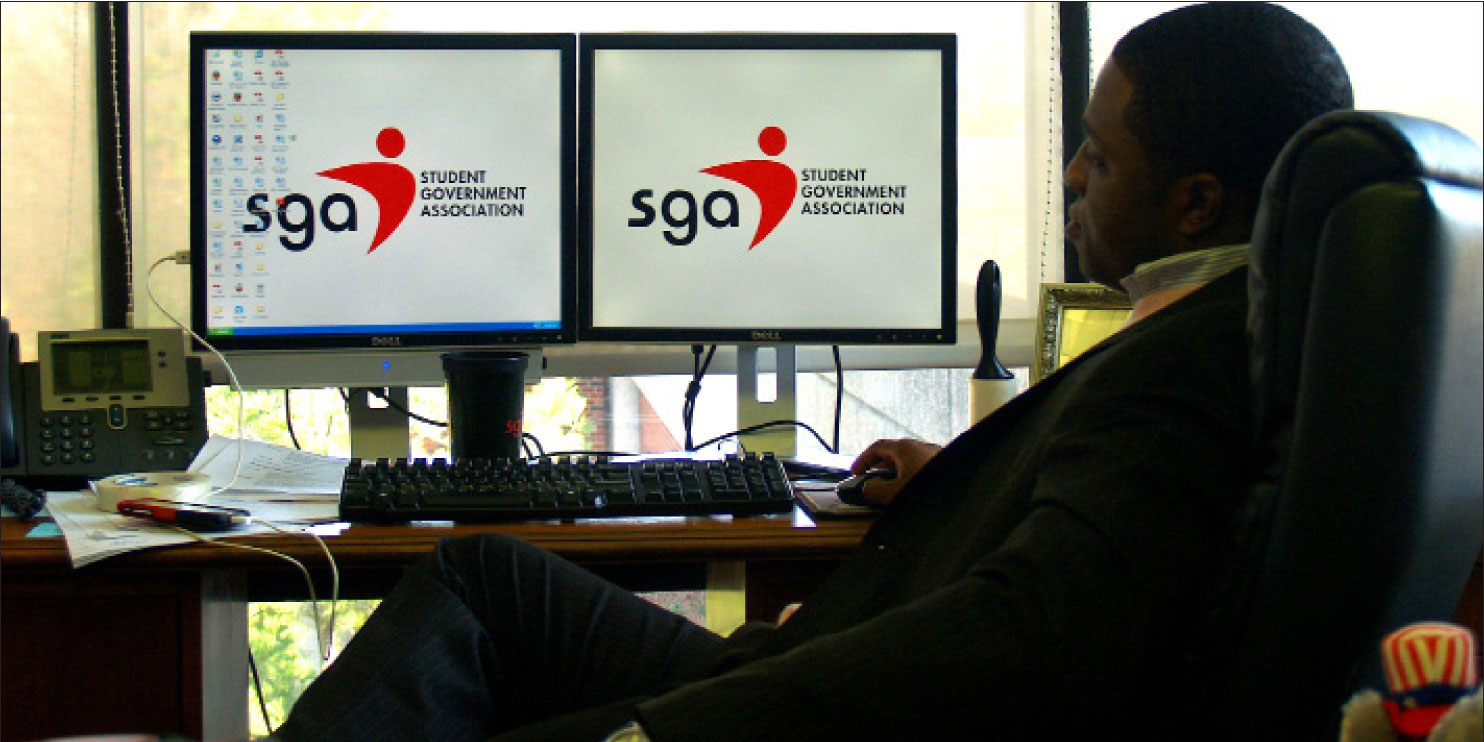
At the University of Louisville, the Student Government Association purportedly controls a budget of $600,000. This money is appropriated through U of L’s all-encompassing departmental budget. A large part of this funding is financed through student fees.
SGA President O.J. Oleka has repeatedly stated that the money given to the organization results in greater representation for the student body, on what he says is a wide range of issues. Still, due to declining economic conditions and nearly annual increases in the cost of tuition at the university, the members of the SGA Executive Board, under the direction of Oleka, have begun attempts at budget reform.
“I don’t believe in the idea of spending money just because it’s there,” said Oleka. “That was one of my major concerns.”
To address this issue, Oleka recently put forth a proposal that, in effect, would have taken the money which has traditionally been distributed directly to the various school student councils, and put it under the control and discretion of the Senate Appropriations Committee.
“I sort of laid my thoughts out there,” said Oleka. “My thoughts were that the councils should have to request the money that they are spending, because I would think that the purpose of councils would be to lobby for specific issues on the behalf of their constituents.”
This is a job that he believes does not have to be overly expensive. Oleka points to a tendency on the part of the councils to spend larger amounts of money to host events that may or may not produce results. He says this is the fundamental problem with the current spending practices.
“Doing some sort of program that brings students out, but doesn’t really get any questions answered,” said Oleka. “You’re not really formulating any policy based on your specific college or dean; I am not really sure what the point of that is. It may be fun. People come out and have pizza, which is great. But, I mean, what are you really doing that is enhancing the student experience or their academic abilities?”
In the end, however, despite Oleka’s urging, the proposal did not make it past the SGA Executive Board.
“The E-Board failed it,” said Oleka. “So, it didn’t really go anywhere. What the E-Board did decide to do, what they say they’re going to do, is that they are still going to pursue budget reform in some fashion. What that will look like, I don’t know. I suggested this sort of as the course we should take for the future, but E-Board was adamant about continuing their programming.”
Under the current system, the individual student councils submit their particular requests to the university as part of the overall budget. Had the proposal been passed, it would have placed that money into a central fund, controlled by the Senate Appropriations Committee, requiring the councils to request funds from an added middle man. This could potentially help prevent wasteful spending of student dollars. SGA Executive Vice President Stephanie Bonenberger attributes this, as well as recent cuts in council funding, to the failure of the proposal.
“I can kind of see some of this from their side,” said Bonenberger. “Education’s council got less this year than they had requested. I think that kind of worried them. I can understand why there was so much hesitation.”
In the current university departmental budget, covering the 2009-2010 school year, a total of $97,000 was distributed to the councils. The budget shows that the School of Education & Human Development student council received $2,500, while councils like Speed School of Engineering and the Brandeis School of Law received upwards of $13,000. Bonenberger continued by echoing Oleka’s statements calling for reform.
“I really don’t know what the reforms will be,” said Bonenberger. “We have decided to put a committee together next semester to look at it. We need to ask: Is there a better way to spend our money than blowing it on specific events? If you look at councils sometimes, it can be hard for them to get the word out. The best way to get people out is with food, and unfortunately that can be expensive. If everything were cheaper, it would be easier. But there are ways to spend better; we just have to find them.”
Counter to the view of the spending habits of the councils, Bonenberger says that the SGA central administration is providing a more valuable service, with the $ 121,580 allocated specifically to it, than simply handing out pizza.
“I think this year we are trying to hear student voices better,” said Bonenberger. “This can be done without being expensive. But right now this isn’t free. We are advertising, and trying to get students to talk with us, with a real person about their issues.”
Both the president and vice president agree that the problem with the current spending practices does not lie in the size of the budget.
“A large part of the money went to the [Student Activities Board], to host events,” said Bonenberger. “I don’t have a problem with the size of the budget, as long as we can find a way to spend it better.”
Oleka reinforced this, by listing the programs and events offered through the student government, such as Listen up Legislatures and a new program to provide free tax preparation assistance to students.
“I feel that there are some real returns on this program,” said Oleka. “The tax program could potentially save thousands of students thousands of dollars over the years.
After admitting that often these programs are not overtly expensive, the president lamented that his position doesn’t allow him to return the money to the students.
“I don’t get to send taxes back to the people,” said Oleka. “I don’t get to reform the tax code, if you will. And really, on that end, it would only be like $12 that would go back to the students. To send that back one year, and then we would have no money, wouldn’t be very responsible.”