 By Mitch Streufert
In the United States there are over 16,000 foreign athletes, all of whom have to adjust to the culture in one way or another. Many have to learn a new language, new time schedules, new traditions and an overall new way of life.
As citizens, many students take all of these things for granted. But would anyone feel comfortable leaving everything they knew behind? Many athletes make that transition, and thousands of athletes flock to the United States to play college athletics.
One of the biggest transitions all foreign athletes have to make is the way they handle their diets. Athletes are some of the most active people on campus. From waking up in the early hours of the morning to lift weights and train, to putting in extra hours of practice, these athletes show dedication to their sports. They are also students, taking at least the minimum of 12 credit hours, but usually more. So they need the proper amount of energy to survive their rigorous schedules. Their food selection is key to how they perform in the classroom, as well as on their various playing fields.
“I can really tell when I slack on my nutritional diet,” said senior Australian tennis player Ashley Irvin. “I feel bogged down, and just don’t feel the same as I do when I eat healthy.”
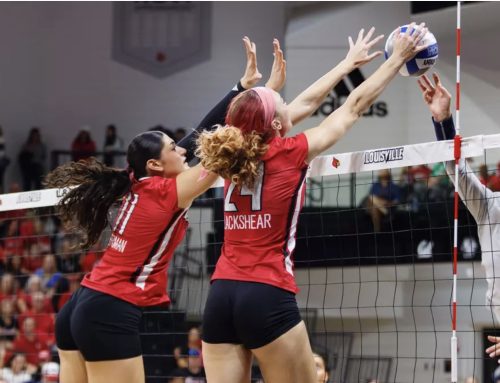
Two of the biggest differences between American food and international food are the serving sizes and sugar content. The differences in food haven’t gone unnoticed by freshman volleyball outside hitter Lola Arslanbekova and sophomore volleyball outside hitter Anastasia Artemeva.
“Americans don’t realize how sweet everything is here,” said Russia-native Artemeva. “The candy is sweeter, the bread, even drinks like orange juice and soda.”
“Everything is a lot sweeter, but things are a lot fattier over here too,” said Uzbekistan-native Arslanbekova. “When I first arrived here, I felt like I was putting on weight. So I started looking at ingredient labels, and noticed how much more fat was in the food. I really had to watch what I was eating, to keep myself in playing shape.”
Staying physically fit is a huge concern for athletes; monitoring what they eat is key. Athletes at the University of Louisville have a variety of choices—ranging from pizza to sushi. Of course, choosing the healthy alternative is often easier said than done.
“I really love Chick-fil-A, but it’s pretty fattening,” said sophomore Australian tennis player Sarah Miller. “So I have to pick a variety of foods in the SAC. I love sushi, so I have that at least a couple days a week. Subway is alright. And I try to stay away from anything fried, if possible.”
However, foreign athletes do enjoy the rare visit back to their home countries. Most athletes only get to visit home once or twice a year. And in going home they get a chance to get re-acquainted with their native cuisine.
“Of course, I enjoy returning home,” said Miller. “I get to see old friends and see my family. And yes, going back and having a sandwich with Vegemite [an Australian food paste] on it is nice. Although, overall, I’ve grown to like the food here. It’s part of the experience.”
For each of these athletes, finding a way to live and perform in a new place is a challenge that they will gladly face. Balancing the changes in lifestyle, especially food choices, with the satisfaction of their experiences in school, is one challenge they will likely only experience once in their lifetime.