 By Stephen Georgestaff Writer
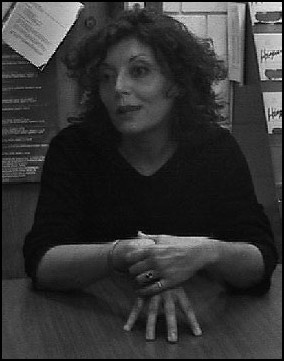
Alicia Kozameh, an Argentinian author and former political prisoner, is spreading her story of political and humanitarian atrocity to the Louisville community this week.
Kozameh, who was imprisoned under the military dictatorship that began running Argentina in 1974, spoke yesterday in both a Latin Studies class and an upper level Spanish class. She is speaking today in Humanities 210 at 1 pm, a lecture that will be in Spanish, and tomorrow in Davidson 303 at 10 am and again in Humanities 211 at 4:30 pm. Wednesday’s 10 am lecture will be in English, while the following will be in Spanish. Kozameh’s appearance at U of L is sponsored by the Latin American Studies program, the Liberal Studies program, the History Department, the Department of Classical and Modern Languages, and the Women’s Studies program.
Kozameh was a 22-year old college student when she was abducted from her apartment and imprisoned in 1975 by Argentina’s “Triple A,” the Argentine Anticommunist Alliance, a right wing “death squad” whose purpose was to thwart anti-government activism and silence those speaking out against the military rule. Kozameh had previously published politically oriented poetry in several national newspapers and was a vocal opponent of the military rule. She spent over three years in prison, fourteen months of which was spent locked in a basement with 30 other women.
“It was groups of right wing people killing people fighting for their rights,” she said of the Triple A. “They were just killing people all over.”
“When you are a student at a university, you are a communist (in their eyes),” Kozameh said. “It’s just the rule. That’s the way the government thinks about you. If you are learning something or interested in someone else’s wants or needs, you are a communist.”
In March of 1976, the military completed their coup d’etat and formally assumed power in Argentina. Kozameh said the “death squads” marched through the streets and murdered dissenters at random as soon as the formal overthrow took place. Kozameh is sure she would have been killed had she not been in prison. “Oh, absolutely,” she said. “It saved my life.”
Kozameh was imprisoned until December, 1978. Even upon her release, she was certainly not free. She was “encouraged” by the military to leave the country, yet she could not get the proper documents to leave. She applied for refugee status in the United States, but was denied due to her political background. She eventually escaped to Los Angeles and then to Mexico, where she spent time in exile completing her second and most well known novel, “Pasos Bajo El Agua (Steps Under Water)”, which detailed her imprisonment through a fictionalized account.
“Fiction is a way to put distance between your emotions and the story itself,” Kozameh explained as the reason why she decided not to recount the event historically. “Sometimes when you write about your obsessions or about certain events you went through, emotions don’t help in your writing. In order to be a little objective about the quality of your writing, then fiction is the way to get away from the emotion.”
In the novel, Kozameh tells of a “library” that she and the other female prisoners kept. After the coup d’etat was formally completed, prisoners were no longer allowed books or any reading material. The women wrote on cigarette paper with a fine point pen in very small handwriting. “We wrote down (the titles of) books that we were interested in, that we remembered: medicine, literature, politics…anything,” she said. “We used to roll all those papers in sort of a tampon form. Then we’d wrap the roll of papers in plastic and seal it with a cigarette. It became a tampon. We used to hide it where we had to hide it.”
Kozameh believes that art is a better medium than history, due to its cultural effectiveness and overall staying power. “Testimony is very good to keep the memory alive,” she said. “But I think that art survives forever if it’s good. This way, the testimony will stay forever if the art stays.”
Kozameh returned to Buenos Aires in 1985 to finish her studies at the university and to publish her novel. “Steps Under Water” sold out within six months of its publishing. Needless to say, the Argentine government was not thrilled with the book. Kozameh returned to Los Angeles and resides there today.
Although she has enjoyed success telling her story, Kozameh still has trouble talking about it sometimes. “It is difficult,” she said. “I do it all the time, though, because it’s something that is very necessary. It’s also a way to get rid of the ghosts that surround you all the time. It’s a nice way to communicate that experience, to let everybody know what’s going on in the world so it doesn’t happen again.”