 By Elijah Mckenzie
College is expensive. Tuition is not getting any cheaper. Part-time jobs help, but there are only so many occupations a student can hold before feeling burned out. Luckily for many, the University of Louisville has an answer to this overwhelming dilemma.
In 2007, in response to the rising costs of college, U of L initiated a special program called the Cardinal Covenant. The Cardinal Covenant seeks to help fund the education of students from low-income families and is the first program of its kind in the state of Kentucky.
Through the Cardinal Covenant, qualified students will be able to graduate debt-free, as long as they follow two stipulations: graduate within five years and remain eligible for Pell Grants each year.
According to the United States Census Bureau, 22.6 percent of Kentucky families live at or below 150 percent of the federal poverty level. The Cardinal Covenant program attempts to make college attainable for these families.
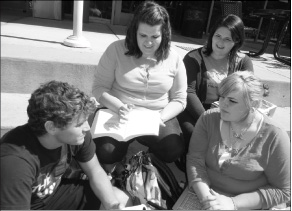
Recipients of the Cardinal Covenant understand that they have been given the rare opportunity to attend college and graduate debt-free. However, some Covenant students have felt the need to use this opportunity to give something back to the community, thus creating the Cardinal Covenant Society.
“Without the Cardinal Covenant, none of us would have the chance to go to college,” said Aaron Wells, a junior political science major and the president of the Covenant Society. “With the Society, we just want to do something positive with what we’ve been given.”
The Cardinal Covenant Society started in 2009, with just a handful of students who were willing and able to volunteer on campus and throughout the city. Their first community service activity took place at Americana Community Center, a nonprofit organization in Louisville that serves the immigrant and refugee population.
“The fact that we were able to get this idea up and running really opened a new world of possibility for us,” said Roxanne Gillenwater, a junior undecided major and the secretary of the Covenant Society. “It’s crazy – crazy in a great way.”
Now in a more established state, the Covenant Society boasts a larger membership and is currently on the lookout for a new nonprofit organization to become involved with.
“We always do our community service work together,” said Chelsea McKendree, a sophomore undecided major and the vice president of the Covenant Society. “This is because we like to take time to reflect on our service and talk about how it impacts others. It really puts things into perspective and makes us realize just how fortunate we are.”
Through their volunteer work, the members have built strong relationships with one another. But the students of the Covenant Society already share common ground in their history of financial hardship. Because of these burdens, the members of the Covenant Society have come to share their struggles and victories with one another.
“To see each of us grow individually, as a team, has been pretty awesome,” said Alexis Gillenwater, a sophomore undecided major and historian of the Covenant Society. “When one of us accomplishes something, it becomes something special to all of us.”
In recent months, the Cardinal Covenant program made history. Nicole Wilkins, a communication major, became U of L’s first student to graduate through the Cardinal Covenant program. These kinds of success stories are what Cardinal Covenant is all about.
According to Mike Abboud, associate director of student financial aid, Cardinal Covenant students are assigned academic advisers who provide guidance through the often turbulent years of college. Covenant students also are encouraged to participate in REACH tutoring programs and study seminars.
As helpful as these resources are, Cardinal Covenant students may still find themselves wanting to belong to a group of people who understand their adversity. This is why the Cardinal Covenant Society exists.
“The goal of the Cardinal Covenant Society is to build a community of students that want to make something of their scholarship,” said Wells. “We want to contribute to the needs of the Cardinal Covenant program, but we also want to become a support system for each other.”