

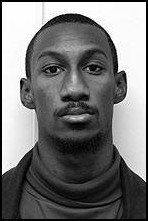
 By Phillip M. Bailey
Right-wing defector David Brock, author of the political memoir, “Blinded by the Right: The Conscience of an Ex-Conservative,” entered Washington D.C. with a plethora of newspapers, think tanks and dexterous social clubs eager to perfect his executioner style of conservatism. Brock notes in his newest book, “Republican Noise Machine,” that “the most important sectors of the political media — most of cable TV news, the majority of popular op-ed columns, almost all of talk radio, a substantial chunk of the book market, and many of the most highly trafficked Web sites — reflect more closely the political and journalistic values of the Washington Times than … New York Times.” Given the ascendancy and success of Fox News, the Wall Street Journal, The New York Post and National Review (just to name a few), Brock’s political confession is by no means dismissable.
Astoundingly, with the acknowledgements of a powerful right-wing media and bully pulpits like the O’Reilly Factor, the right still employs the useful myth that the lion-share of America’s public spheres are riddled with liberal bias. Besides the media, one of the favorite punching bags of the right is the American college campus. Even though trained young Republicans have tripled since 1997, outnumber Democrats, and exceed them in political organizing through national networks, conservatives fondly parade a victimology they decry others for.
The University of Louisville is no different. Although conservatives have aired the two most controversial political campus issues in recent years, Sister Souljah’s lecture and professor McTighe’s ouster, conservatives still grumble their voice is disempowered. I’m still waiting for that Conservative Values Center, by the way.
By coupling its power with victimization, the right has convinced a substantial portion of the neutral American public of an upside-down universe where they are disfavored and the left, particularly on college campuses, controls everything. A primary example is the criticism of the left-of-right sentiment that supposedly dominates the Louisville Cardinal. Roundly ignored is that the op-ed section runs every piece of conservative rambling it can find.
Hendrik Hertzberg, editorial director of The New Yorker, likens the right’s useful myth in the context of burgeoning conservative power to the communist propaganda machines of yesteryear. Hertzberg said, “Like the American and other Western Communist parties in their heyday, the American conservative movement has created a kind of alternative intellectual and political universe … dedicated to the single purpose of advancing a predetermined political agenda.” Unlike communism, however, conservatism is seen as a legitimate political philosophy under the American ideology.
Conservative activist and reparations detractor David Horowitz proposed the solution to leftist bias on college campuses in an “Academic Bill of Rights.” Sounds righteous: any guarantee of protections to the rights of students and faculty, conservative or not, would extend to all.
But that may be a problem for the conservative hatchet squad. According to The Christian Science Monitor, one of Horowitz’s eight points include the idea that faculty cannot be fired on the basis of political or religious beliefs. Would Horowitz consider the political touchy McTighe controversy as a violation of the sociology professor’s “Academic Bill of Rights,” which was no more truculent or unpopular than the Klu Klux Klan, which is allowed regular access to U of L and its marketplace of ideas?
Phillip M. Bailey is a junior double-majoring in Political Science and Sociology, Chair of the U of L SNCC and is a columnist for The Cardinal. E-mail him at: pbailey@louisvillecardinal.com





