 By Alex Bradshaw
The fireworks show held last week near the Student Activities Center was not intended to entertain students but rather to scare away flocks of birds that could potentially carry disease.
The United States Department of Agriculture used pyrotechnics, called “screamers and bangers,” each night at dusk last week to eliminate the thousands of European starlings that were roosting in the trees lining the sidewalk near the SAC.
The birds are not just pesky noisemakers that eat trash. An abundance of European starlings is also a health risk.
“The fecal matter of the starlings can lead to histoplasmosis and even blindness,” said Brian Kirby, an employee of the United States Department of Agriculture. Histoplasmosis, a fungal respiratory disease, can in rare cases lead to blindness or death.
European starlings, a type of bird brought to America in the 1800s, love to consume human-created waste and tend to nest in bushy deciduous trees. The area outside of the SAC creates a perfect environment for the birds, as it has both the right kind of trees and an abundance of trash and human waste.
Kirby, along with other members of a team from the Department of Agriculture, came to the aid of U of L. The USDA used pyrotechnics to make the birds disappear without harming them.
“These birds come together in such an abundance like this for safety,” Kirby said. “They’ve found a place [at U of L] that they can eat and rest in peace. What the pyrotechnics do is catch the birds off-guard. They aren’t used to this, and they will eventually associate the SAC as an area that isn’t safe.”
Unfortunately, though, the birds currently on campus make up only one particular flock of European starlings. Kirby said that he cannot guarantee that a different flock won’t come to the SAC to replace them. So far, the USDA has prevailed in removing the birds from campus. They estimate that approximately 4,000 European starlings have been shown the door.
“The only starlings that we see now are the occasional flock of maybe nine flying overhead,” Kirby said. He believes that the current flock has already left.
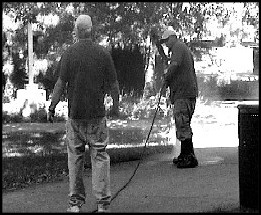
Jim Slayden, assistant director of the Physical Plant at U of L, said the university contributed to the removal as well. On Saturday, after the USDA left, university workers cleaned up the mess that had been left by the birds. “Our team will wash down all of the sidewalks around the SAC to make sure all of the bird droppings are gone,” Slayden said earlier last week.
Due to efforts by the USDA and U of L, the European starling problem has ceased. Only time will tell whether the SAC will host another flock of birds and create a recurring problem for the university.