 By Andrew Krumme
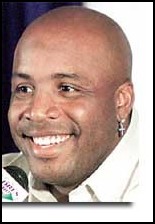
I like Barry Bonds. I like him as a player, and in my opinion, steroids or no steroids, he is the greatest player to walk the Earth. He joined the 40-40 club (with 42 home runs and 40 stolen bases) in 1996, which may be one of the most underrated accomplishments in all of sports. He is the only player to have more than 500 home runs and 500 steals in his career, not to mention being undervalued for his play out in left field.
I like Barry as a person too. He is the most arrogant professional athlete in my lifetime, and he has the right to be because he is also the most dominant. In my opinion, he has been getting a bad rap over the past four years as the steroid controversy in all of baseball was exploding onto the national scene.
Now, before I defend Mr. Bonds, I want to let you know (yes you â?” the general public who nurses such hatred for this man) a little about the history of steroids.In 1926, several men extracted over 20 milligrams of “male sex hormones” from bull testicles. Less than 10 years later, in 1935, several chemists from Amsterdam successfully isolated male sex hormones, later referring to them as “testosterone.”
Just 21 years after that, methandrostenolone was synthesized and sold as Dianabol, becoming the first anabolic steroid available commercially in America.Jose Canseco won the 1986 American League Rookie of the Year, and he later admitted to using steroids throughout his entire major league career.
Five years later, in 1991, then-commissioner of baseball Fay Vincent added steroids to baseball’s list of banned supplements in a memo to all teams and the players’ union. No testing policy or any real attempt to limit its use was put into place.
In 1995, the current general manager of the San Diego Padres, Randy Smith, goes on the record saying, “We all know there’s steroid use, and it is definitely becoming more prevalent.”In 1997, interim Major League Baseball Commissioner Bud Selig issues another memo to clubs that steroids are illegal – this coming six months after a new labor deal was struck with no testing policy in place.
Former National League Most Valuable Player Ken Caminiti tells Sports Illustrated in 2002 that he was on steroids during his MVP season and estimates that 50 percent of baseball players use steroids.Later that year, a new labor deal is negotiated with random and confidential steroid testing in place and states baseball will not act unless more than 5 percent test positive. Once again, nothing comes of this.
Finally in 2004, Attorney General John Ashcroft issues over 40 indictments against BALCO’s Victor Conte and Greg Anderson. Sen. John McCain steps in to pressure baseball to institute steroid testing by threatening to introduce legislation. Canseco then comes out with his book “Juiced: Wild Times, Rampant ‘Roids, Smash Hits and How Baseball Got Big,” naming several prominent players in baseball as steroid users, and you all know the rest.
Can any of you see a trend here? It is very apparent that the sequence of events clearly shows Major League Baseball doing nothing about the growing problem of steroids in the game. In fact, they knew it was going on, and they knew it was good for the game. Sure, anyone can issue a memo saying not to do something, but what does that really do?
Of course, he’s not going to dish out any punishment until it becomes a real problem, or someone above him finally says he has to start disciplining people. It’s not Barry Bonds who deserves your criticism – it’s Major League Baseball. I know Barry Bonds took steroids, but was he really cheating? Plenty of other players were taking them, too, and baseball was doing nothing about it. Bonds did not cheat. He just took advantage of the system.
The fact remains that after the 1994 strike, baseball needed a pick-me-up, and letting steroids run rampant was the solution. Home runs began flying out of the park in record-breaking numbers, and as the balls began floating into the stands, so did the fans.Bonds was just one of hundreds of players who took advantage of baseball turning its blind eye to steroid use, and now he is catching all the heat.
How many of you would not do the same thing that Bonds did? If you saw a way to improve your performance (not to mention fatten your wallet and gain some recognition) and management was going to ignore it because it was good for the company, wouldn’t you do it? That is all Barry Bonds did, and he is not the one to blame.