

 By Glypie Grider
By Glypie Grider
Features Editor
ggrider@louisvillecardinal.com
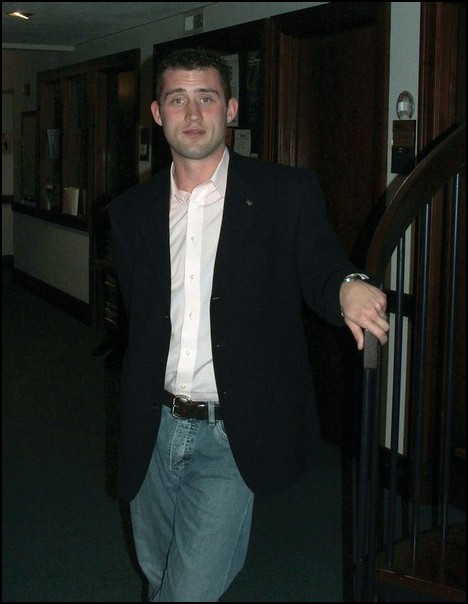
Christopher Harper, 23, isn’t your typical University of Louisville graduate student. He isn’t your typical politician, either, and in his quest to become the County Clerk of Bullitt County, Ky., Harper is making a name for himself – in his hometown, at U of L and across the state.
On Nov. 10, Harper filed for candidacy for the clerk position in Bullitt County (due south of Jefferson County), making him the youngest candidate ever to file for that position in the county’s history. To date, he is also the youngest candidate to file for an elected position in Kentucky for the upcoming 2006 election cycle.
Harper plans to speak to the College Republicans student organization on campus today at 6 p.m. in room 315 of the Student Activities Center. He will address why civic involvement is important for the college-age demographic and share his story about how and why he is entering politics at such a young age.
“I also want to help students realize that it’s important to see both sides of an argument – that’s what makes for great debate and strengthens your position,” he said.
Harper is no stranger to the political process: he graduated with honors with a Political Science degree from U of L in 2004. He is currently a graduate student at the Kent School of Social Work at U of L, and despite the course-load and practicum hours he must complete, he wanted to tackle the chance to become a county clerk.
“The opportunity arose, and for me to secure a position of influence in a fairly large area while at the same time giving back to the community that has given so much to me growing up is something I would be honored to do,” Harper said.
Harper claims his interest in social work and social understanding is the perfect stepping stone to a life of public service. “It helps me understand how the world is thinking,” he said. “I can get my hand in there at the most basic level and help bring the entire system up.”
Harper is running unopposed in the Republican primary, but potential candidates have until Jan. 30, 2006, to file. The primary elections will be held May 16, with the general election taking place Nov. 7 of next year.
“People didn’t think I was serious until I filed the papers,” Harper said, referring to the criticism and lack of respect he’s getting due to his age.
U of L Political Science professor Phil Laemmle said Harper’s age is a factor in the upcoming election but not something that should break the campaign. “He’s very young with no track record,” Laemmle said, “but he’s gregarious, thoughtful and did two internships which helped him focus his goals.” Dr. Laemmle was one of Harper’s professors during his undergraduate studies.
Harper hit the ground running with his campaigning efforts and already has signage and propaganda posted. He is working on letting local businesses know about the upcoming election, but he said the key is word-of-mouth campaigning. “I’m young, which is on everyone’s tongue, so they keep talking about me,” he said.
Harper, who admitted his young age “is an issue” for his upcoming election, is in good company with some sitting politicians. Kentucky Secretary of State Trey Grayson set a record when he became the youngest official in the nation to hold that office at age 33. Jeffrey Dunkle was elected the country’s youngest mayor four years ago when he was voted Mayor of Mount Carbon, Penn., at age 18.
Harper said these examples are considered oddities because as a whole, young people don’t understand what’s going on with political affairs. “Our whole generation lacks political efficacy,” he explained. “Our voter turnout is low and participation in any form or level of government is low. I hope that I, a young, attractive, articulate candidate, will help motivate our generation to take action and turn that around.”
Harper said the college-age demographic is “left in the shadows,” and politicians don’t target the age group because they know young people don’t vote.
“College students need to realize that all the griping and complaining about politicians and policies means nothing unless we start to become the largest voting block. Only then will politicians really start to listen,” he said.
According to the Center for Information and Research on Civic Learning and Engagement, the voting rate for 18-to-24-year-olds has declined by 15 percent since 1972 when 18-year-olds were first granted the right to vote. A recent study by the Harvard Institute of Politics suggested that there is a potential for 9 million young people to become politically engaged, if targeted.
“The problem for young people is that they are always harping about change, but they get sidetracked by midterms, finals and papers,” Harper said. “We really need to change that.”
Sara Henry, Harper’s public relations manager and a graduate student in the Political Science department at U of L, said that one of the main reasons she decided to join Harper’s campaign was because of his intelligence and progressive-mindedness. “He likes to bring about change and reform where he sees stagnation,” Henry said.
Harper, if elected as Bullitt County Clerk, plans to update the Bullitt County clerk office technologically. “It lacks new ideas and innovation. I want to bring it up to par with the rest of the 120 counties in this great commonwealth,” Harper said. He also plans to continue his studies even if elected to the position.
For more information about Harper and his upcoming election, visit his Web site at http://www.harperforclerk.org.





