

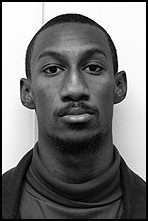
 By Phillip Bailey
Intellectual. Scholar. Political scientist. So many terms could be used to describe the distinguished U of L professor Dr. Paul Weber, but none could fully express the man. Similarly, no word can effectively describe the void that colleagues, students, friends and family feel from his untimely death last week due to cancer. If the African proverb “A library burns each time an elder dies” is true, losing Weber’s elephantine intellect means we’ve lost incalculable sections.
When I heard last year that he was terribly ill and would be retiring, I tried to speak with him before he left, hoping to extract a bit more wisdom and enjoy some serious political conversation – but this was sadly to no avail. I will miss my frequent freshman-year visits to his office to discuss almost every political happening of the day. He was refreshingly straightforward with me; at the end of one conversation that took place after I met then-National Security Adviser Condoleezza Rice, he winked and said, “But not everyone’s as radical as you.” He was among the few professors whose conversations cemented my resolve to throw my mind into the discipline of political science. And that was one of Dr. Weber’s joys: “For a professor,” he wrote, “there is nothing quite so satisfying as inspiring ordinary students to achieve extraordinary results.”
With research facilities, athletics and new stadiums dominating U of L news coverage, Dr. Weber remained anchored in what really makes colleges tick: teaching and students. Maybe in honor of his memory we ought to return to that. His vision for the university was bigger than dollars and cents. Like W. E. B. DuBois and many others, he saw education as a door through which poor and working-class people could enter into middle-class and professional status.
Weber knew that higher education could be as socially empowering as it is financially beneficial. He described challenges that students overcome in almost prophetic terms, saying once that U of L had a “remarkable number of unsung heroes [who] conquer their demons here and graduate against the odds.”
Never was he wrapped up in the elitism that often comes with his profession. Despite his impressive resume, he maintained a modesty that academics with lesser accomplishments sorely miss.
Spearheading two of U of L’s most prestigious programs, writing for numerous academic journals and making entries for The Kentucky Encyclopedia and The Louisville Encyclopedia made Weber one of our perennial scholars. Only death could take that away.
Still, for Dr. Weber this all came secondary to the young minds of which he was given stewardship. “Dr. Weber was the ideal professor,” said Dr. Gary L. Gregg, a colleague and friend of Weber’s who is the director of the McConnell Center for Political Leadership. “Where some teach only because they have to and treat students as a burden, Dr. Weber always knew he was here because of the students and for them.”
Writing columns in remembrance of the deceased is always difficult because of its apparent simplicity. Loved ones pass on and we grieve and move forward. We name monuments, buildings or parks after them in the hopes that it measures their personal and, in the case of Dr. Weber, public value. But because Dr. Weber’s death acutely affects our campus, perhaps we ought to take it as a reminder of what our purpose at U of L truly is. We should thank those who daily improve our civilization with their intellect and ideas, and encourage the administration to remember that Dr. Weber’s simple belief that colleges exist, first and foremost, to teach students is the hallmark of a great university.
Phillip Bailey is a senior majoring in Political Science and a staff writer for The Louisville Cardinal. E-mail him at: pmbail03@louisville.edu





