 By
By
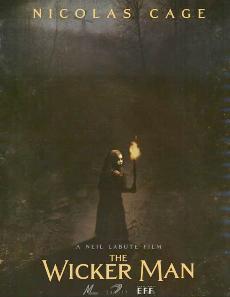
In 1973, Anthony Shaffer’s novel was adapted into the cult classic horror film known as “The Wicker Man.” Nicholas Cage and writer-director Neil LaBute introduce a new generation to a story about the power of belief and sacrifice. In doing so, LaBute peels the skin off the plot and guts out the character development creating a horrific film indeed. The Wicker Man is now in theaters, but not for too long because it’s bad.
The original, also characterized as a folk musical due to the composing efforts of Paul Giovannito, begins with Sergeant Howie executed brilliantly by Edward Woodward landing on Summerisle Island investigating the disappearance of child, Rowan Morrison. Sgt. Howie, a devote virginal Christian and indomitable officer, discovered after meeting Lord Summerisle played by legendary actor Christopher Lee that the residents are Pagans, who survive by growing and selling their crops. Every year the residents of Summerisle celebrate May Day and sacrifice something to the gods for a successful harvest. Sgt. Howie disgusted by their aculture races to find Rowan Morrison after learning their last harvest failed terribly and she will be sacrificed to the Wicker Man.
Neil LaBute released his version missing many elements credited to the original film’s success. Cage plays Edward Malus, a lonely man who travels to Summerisle at the request of his ex-fiancé, whose child is missing on the island. LaBute rewrites Summerisle as a matriarchal community of neo-paganistic women as first class citizens and men as second-class citizens, who travel off the island to seduce men back for sacrificial purposes.
Gone is the explanation and illustration of their Pagan culture. Gone is the peaceful dialogue exchange of clashing cultures. Gone is the development as to why Cage’s character is so driven to find the missing child. Gone is the climactic ending that left moviegoers in the 1970s shaken and questioning their faith. Gone is the skin and meat of the film. The missing elements are replaced with silly costumes for depicting a culture, short monologues with little peace to explain opposing views, empty performances by the entire cast and no questions.
Cage used his star-power to get a studio to green light the remake having LaBute, a noted playwright, directing this crap. In an interview with comingsoon.net LaBute said, “You absolutely can watch both of [the films] and see a similar journey there. The screenplay that Anthony Shaffer wrote was very strong and very sound. I didn’t want to be involved in something that I was just remaking. When I came onto this, [Cage] was already involved through his production company, and he wanted to re-imagine, to take it a different way. While the results are the same and you recognize the journey, it’s a very different road that we travel than the original one.”
The results are the same, but the effect isn’t. Instead of viewing the remake wasting eight dollars in the theater, visit the local video rental store and get “The Wicker Man.” Take the opportunity to view the masterful written work of Shaffer and the excellent cast. See why Cage and LaBute went on a journey to attempt in recreating and failing miserably like the Summerisle harvest to expose a new world and way of living.