 By Lan Nguyen
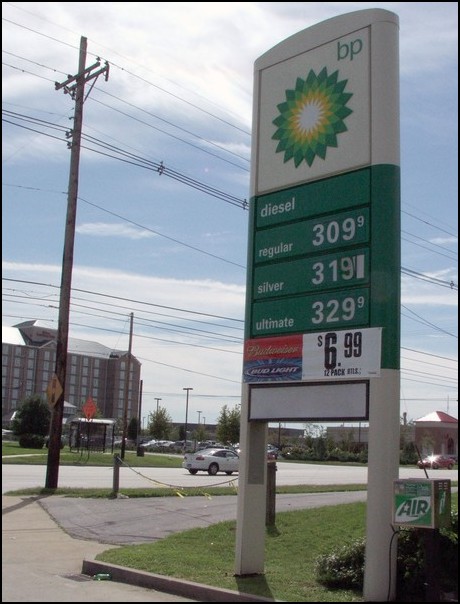
In the days following Hurricane Katrina, gas prices have spiked to record highs across the nation. The high cost of refueling their cars has people wincing every time they think about driving. It’s especially tough on those with a limited budget, people like college students.
“I’m definitely cutting back on my driving and getting carpool money,” said Sarah Payne, a commuter student at U of L.
Due to the destruction caused by Hurricane Katrina, several oil refineries along the Gulf Coast were forced to shut down. Approximately 40 percent of the nation’s refining capacity is located in that area, according to CNN’s Web site. Two pipelines that provide gas to the eastern part of the U.S. were also shut down for a period of time because of power outages. The pipelines are back in service, though not operating at full capacity.
Local gas stations raised the price of gas overnight to nearly three dollars per gallon or more at many locations. As of Friday in Louisville, gas prices range from $2.42-$3.34, stated http://www.louisvillegasprices.com.
According to some economic experts, the price of gas could increase beyond $4 per gallon.
“There’s no question gas will hit $4 a gallon,” said Ben Brockwell, director of Pricing at the Oil Price Information Service. “The question is how high will it go, and how long will it last?”
Brockwell’s theory is not good news for students already struggling to pay for gas at its current price.
Commuter students who have to drive long distances to get to school or work are especially concerned.
“It’s really stressful,” said Jason Cook, a student at U of L who commutes nearly 30 minutes to campus five days a week. Following class, he usually goes straight to work.
“I never used to have to worry about [gas prices] before when gas used to waver just a few cents,” he said. “Now, I have to make sure I work it into my budget. I basically want to park my car and leave it somewhere.”
Students are finding themselves cutting corners whenever they can, including staying as close as possible to campus in order to preserve their current gas supply and save money for future gas purchases.
Students who typically drive home long distances to visit family are also being forced to reconsider how often they make the trip.
“I’m so freakin’ poor! I don’t have money for gas. This [Labor Day] will probably be the last time I go home for a while. Although my parents help me pay for gas, it’s just too expensive to drive home every so often right now,” said Rachel Roberts, who drives two and a half hours to get home.
Other students are opting for a much cheaper mode of transportation — walking.
“I walk to school every day because I can’t afford to drive, and the increasing gas prices have made it impossible for me to go home regularly,” said Cassie Lyles. Lyles stays in an apartment about five blocks from campus, but has to drive three and a half hours to get home.
Though no one can say for sure how high gas prices could rise, students are already feeling the financial strain.