

 By Jenna French
Students who live on campus don’t really have a choice about what kind of pets they can bring into the dorm â?” they’re limited to fish. And unfortunately, students who live off campus are usually at the whim of their landlord or apartment manager regarding whether or not they can have pets.
But pets can play important roles in people’s lives, especially in the lives of college students, whose stress is always elevated and who are away from home and loved ones. According to the Housing Herald, a handbook for students who live on campus, “possessing any pets in the halls other than fish” is a Level I violation â?” but surprisingly, even fish can provide that much-needed companionship.
According to the Animal Health Care Web site, http://www.animalhealthcare.ca, “The psychological bond between humans and animals is especially beneficial to people experiencing life changes, senior citizens and terminally ill patients.”
Fish are said to have an especially calming effect, which would explain why so many dentists and doctors have aquariums in their waiting rooms. Fish don’t take up a lot of room, don’t make noise, and are easy to maintain â?” three key plusses for the busy college student who wants a pet.
Amber Richeson, a Louisville sophomore, lives in a dorm on campus and is the proud owner of a 1.5-gallon aquarium, home to her two pink gouramis and her red-eared slider turtle (which she cleverly named Hamster). Richeson did her research before purchasing her fish and discovered that gouramis are mild-mannered fish that tend to get along with most other types of aquatic animals. This makes a striking contrast to a fish like the Japanese fighting fish, or beta fish, which cannot live in a tank with any other fish because the two will fight to the death.
Richeson’s gouramis are also relatively low-maintenance. “They eat normal fish food, which is about $5 at Wal-Mart, so it’s not hard to feed them,” she said.
Her turtle, however, is a different story. “The light for the tank, his rock, the special food â?” all of that was pretty expensive,” Richeson said. “He has to eat freeze-dried worms and shrimp, and that gets to be pretty money-draining after a while.”
The twice-weekly cleaning of the aquarium can also be taxing, Richeson said. But other than that, she enjoys her pets. “The fish get along with each other, and the turtle just stays on his rock under the lamp and doesn’t bother anybody.”
For anyone who believes a person can’t form a bond with a fish or turtle, think again. “I’m actually quite close to my fish. I feel like they know I’m the one that feeds them and I feel like they know me. Hamster [the turtle] sits on my desk with me sometimes and keeps me company while I do my homework,” she said.
Another U of L sophomore, Elise O’Bryan, owns two cats, two dogs and a lizard named Franklin. She lives in an off-campus apartment, but she said while her pets are fun to live with, they can get extremely expensive. “It’s hard having to buy dog food, cat food and food for a lizard. It also gets hard because neither me nor my boyfriend are at home during the day, so when we get home we have dogs to walk and we have to clean up all kinds of messes.”
O’Bryan brought one cat and one dog from home, and adopted the other two because she couldn’t turn a homeless animal away. “I just have a soft spot in my heart for an animal without a home,” she said.
One of O’Bryan’s dogs is a cocker spaniel named Libby, and the other is a Pomeranian named Rocko. Both of these breeds are smaller, and they can adapt to a small living area.
O’Bryan, like Richeson, is very close to her pets. “I wouldn’t trade them for anything,” she said.
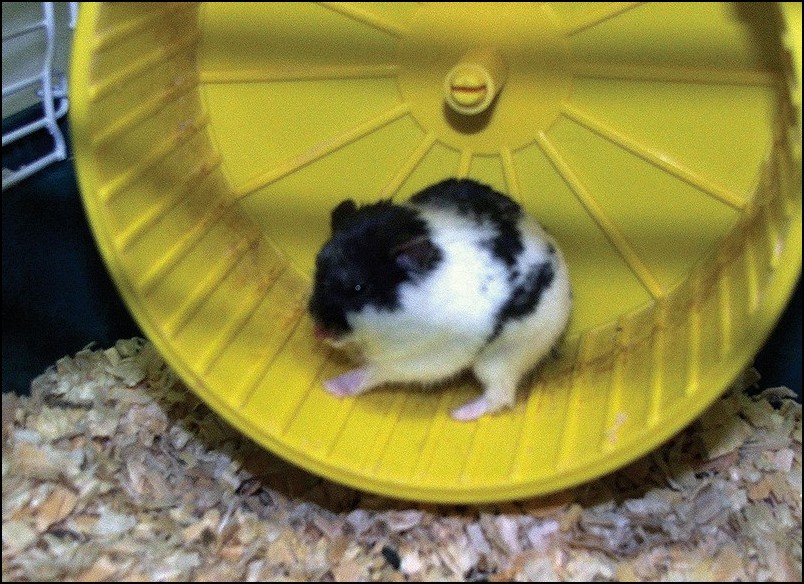
A representative from Superpetz, a store in Louisville, also suggested birds as a possibility for a student living in a smaller apartment. Small animals such as ferrets, hamsters and guinea pigs can also handle smaller spaces better because they live in a cage and don’t notice room size.
Perhaps the only bad aspect of pet ownership is the cost of cages and food, along with the pets’ routine health and check-up fees. A new puppy runs about $135, depending on the type of dog and whether it has been spayed or neutered and already has its shots. A new kitten costs around $95 with the same stipulations.
Students who live or plan to live off campus should research the pet policies at prospective housing complexes. Some apartments have a limit on what animals are allowed, others do not allow pets, and some charge a monthly fee for keeping a pet inside.
For example, the Station House Square apartments located at 1509 S. Sixth St. allow most types of pets, except more aggressive breeds of dogs like rottweilers, akidas, chows, dobermans, pit bulls and Great Danes. The complex charges a $100 pet deposit, half of which is refundable, and a monthly fee of $25.
The 800, another apartment complex, is located in downtown Louisville at 800 S. 4th Street and only allows cats. The Hunters Run apartment complex at 5629 Fox Horn Circle doesn’t allow pets at all.
A more comprehensive list of apartment complexes and their pet policies can be found in the Apartment Finder book available at Wal-Mart and most convenience stores.





