 By Dennis O’Neil
Paul McGuigan’s “Lucky Number Slevin” is a film that thinks it’s very smart, and is obsessed with proving it. McGuigan’s search for proof, however, is just one example of the film’s lack of intelligence. Almost any film-goer could figure out most of the plot twists within the first 30 minutes.
This would be less of a problem if the film’s tone were good-natured and fun. The film is recycled from old ’60s and ’70s crime pictures and noir films, but refuses to be playful in the act. The characters take themselves far too seriously, and seem like they were dropped into a noir universe without really inhabiting it.
The film opens with a wheelchair-bound Bruce Willis telling a story to an apparent stranger about a family man whose foolish gambling gets him and his family killed. If there were subtitles, they would read: “Pay attention because this will be important later.”
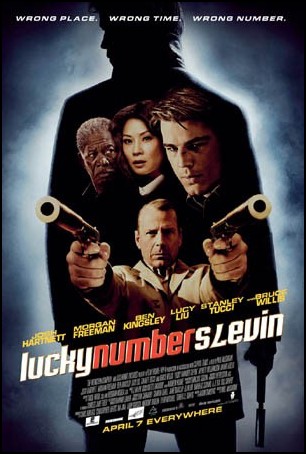
The rest of the film centers around Slevin (Josh Hartnett), a transparent, regular guy waiting in a New York apartment for his friend Nick, a deadbeat gambler who owes a lot of money to a lot of people. One is the Boss (Morgan Freeman), a crime kingpin who mistakes Slevin for Nick and saddles him with Nick’s debts. He offers an out, though: kill the son of the Boss’s rival, the Rabbi (Ben Kingsley), and all debts are paid.
The characters aren’t so much real people as archetypes of the genre. The problem is, the actors fail to realize this. Willis is caged behind a Man-With-No-Name exterior, rendering him all but useless. Sir Ben Kingsley continues to diversify his resume of characters, and, as in “Bloodrayne,” continues to resemble a wooden post while doing it.
Only Freeman, in a devilishly suave performance, and Lucy Liu, playing Hartnett’s innocent love interest, inject their work with any kind of energy or invention. Much of Lucy Liu’s work here belongs in a better movie.
I have deep admiration for a scene in which she and Hartnett discuss their romance in the context of James Bond films. In another great one they share peanut butter and jelly sandwiches while wrestling with Slevin’s deadly dilemma.
The film at least possesses some self-awareness; the scene where Kingsley brings up “North by Northwest,” another film about mistaken identity, creates a refreshingly subtle connection. Most of the film lacks this kind of invention, however. From then on the film accepts its dime-a-dozen fate.
Screenwriter Jason Smilovic saddles us with characters who know that they are characters, yet still tries to find a way for them to be tragic. Toward the end, you feel so jerked around by the movie that the characters’ fates become almost irrelevant.
I’ve never before seen a film occupy its entire third act with an explanation of the previous two. I had also never seen a film invent a character for the sole purpose of providing a plot twist. “Lucky Number Slevin” has both of these up its sleeve.
In the end, you are taken on a very long, winding ride for nothing. It wants to look and feel like ’70s noir, but has little interest in paying it homage or having fun.