 By Alex Bradshaw
Students who dislike the Ohio Valley’s unruly temperature changes have found little relief inside the buildings at the University of Louisville. Due to the university’s heating and cooling system, an unseasonably warm day in winter can leave students sweating inside the classrooms.
Will Thompson, a student at U of L most of whose classes are in Davidson Hall, said the heat makes it hard to pay attention in class.
“When I have an eight o’clock class, I am already fighting sleep,” Thompson said. “With it being so warm in the classrooms, it makes it almost impossible to stay awake.”
“As a student that pays his own tuition, I’d like to walk into class and not feel like I am walking into a sauna,” said Rob Dixon, a student who has classes in Ford Hall.
The university cannot easily adjust the temperatures inside the buildings to adjust to weather changes, students must deal with uncomfortable temperatures a few days each year. According to university officials, the alternative would be higher tuition.
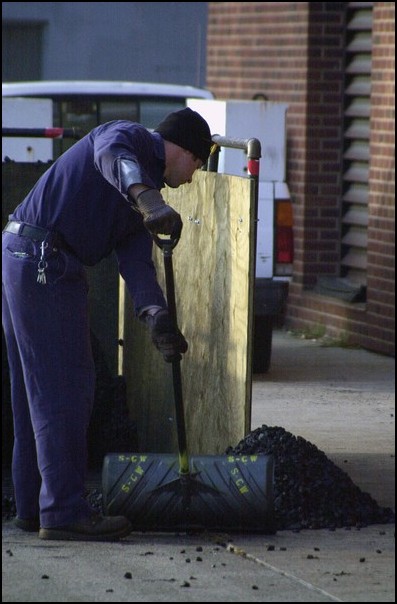
U of L is heated by burning coal. Although natural gas burns significantly cleaner than coal, it costs three times more. The Energy Information Agency projected that the cost of natural gas could go up by as much as 43 percent this winter.
Randy Hall, an employee of the steam plant that heats and cools Belknap Campus, said students would have to cover the cost if the university switched to natural gas.
“I know a lot of students complain about the buildings on campus being too hot, but if we fluctuate heating and cooling with the weather, it could be detrimental to the pipes that the steam goes through to the buildings,” Hall said.
The pipes run underground and transport the steam created when coal is burned. “When you drop an ice cube in warm water, the ice cube expands and cracks. This is exactly what could happen to the pipes,” Hall said.
“To fluctuate heating and cooling accurately and safely, the plant would need more manpower, which means that we would need more money, and that means raise in tuition,” he said.
Other universities in Kentucky such as Morehead State, UK, WKU and EKU use coal for energy, but Indiana University Southeast uses natural gas.
Sam Asberry, director of the IUS physical plant, said that although natural gas is more efficient, he hears the same complaints from the student body about classroom temperature that we hear at U of L. “It is really the same problem with natural gas,” Asberry said. “Once the water heater is hot, it’s hard to go back.” Asberry also said body heat is an issue.
Hall said the current system is as good as the university can get with the budget it has.
“I would tell students to anticipate the changes in temperature by dressing for it and expect the classrooms to be hot for a couple of weeks here and there,” Hall said.