 By
By
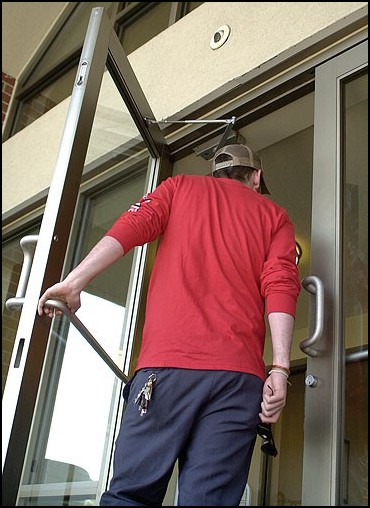
There has been some recent concern over the Phase II student housing buildings’ security measures. Students access these buildings with a keychain that unlocks the exterior doors, and, consequently, nonresidents often piggy-back by entering the building once the door has been unlocked.
It would seem that, for university housing residents, there is a trade-off between security and freedom. The more closely the comings and goings of university students are monitored, the more intensely residents are inconvenienced by these policies.
Many universities have housing policies that limit the number of nights in a month a resident can have overnight guests, or that prohibit visitors altogether after a certain hour, in order to catalogue the presence of nonresidents in the building. These precautionary measures are implemented in order to lower the possibility of theft or violent crime perpetrated by an intruder.
While some residents have voiced complaints over this potential safety concern at Phase II, many others are unmoved. In interviews, resident students emphasized, above all, a jealous regard for their freedom.
The general consensus from interviewees was that the risks are minimal, but the loss of autonomy, which college students, freshly escaped from their parents’ watchful gaze, so highly value, would be unacceptable. This estimation of the immediacy of the threat of crime, however, is not entirely accurate. The recent kidnapping of two U of L students from their Old Louisville apartment by a robber illustrates the pressing need for adequate protectionary measures in campus housing facilities.
Nevertheless, much of the allure of a Phase II unit for many students is the freedom that it affords: the freedom to have unmitigated access for visitors not offered by most dorms. For many students the autonomy afforded by a Phase II apartment partially justifies the cost. If the students are paying a considerable amount of money, should they really be forced to choose between freedom and safety?
Alternative security measures are available that would allow residents the freedom they expect while more effectively guaranteeing their protection from the uninvited and potentially dangerous. Elevators and stairwells that require a key to access floors above the lobby level, for example, would provide additional security.
Residents would retain their unfettered permission to entertain visitors 24 hours a day, but visitor access would be contigent on the resident’s presence. A buzzer system in the lobby would then require any visitor to be accompanied by a resident in order to access the rest of the building.
In the short run, the only immediately available addition to the Phase II security measures would be heavier security at the sign-in desk. Of course, this can be implemented without limiting resident guest privileges, but there would be a loss of convenience. Neverthless, if Phase II residents choose to exercise a growing concern for safety, creating mandatory visitor sign-in (accompanied by the resident that the visitor is a guest of) would be one workable solution.
However, if this is not a palatable arrangement for Phase II residents, the time for action is sooner rather than later. Students who are concerned about the risk of crime, even if they are in the minority, should lobby the owners and operators of the facilities. Encouraging the building managers to think proactively and creatively about student safety will be to everyone’s benefit, even the students who do not place as high a premium on safety concerns as on personal freedom.
Ultimately, there is only a trade-off between autonomy and security if the building managers make no changes to improve the residents’ quality of life. Students shouldn’t forget that they are customers, and this kind of attention is what they are paying for.