 By Ashley Kim
A line of students winding out of the Red Barn at lunch time on April 18 were waiting for the crowd-drawing headliner common at many on-campus events: free food. But the fare they found in the steaming catering platters wasn’t anything like the perennial hot dogs and burgers. Instead, health food – organic quesadillas, sandwich wraps, veggies and sodas – lined the tables.
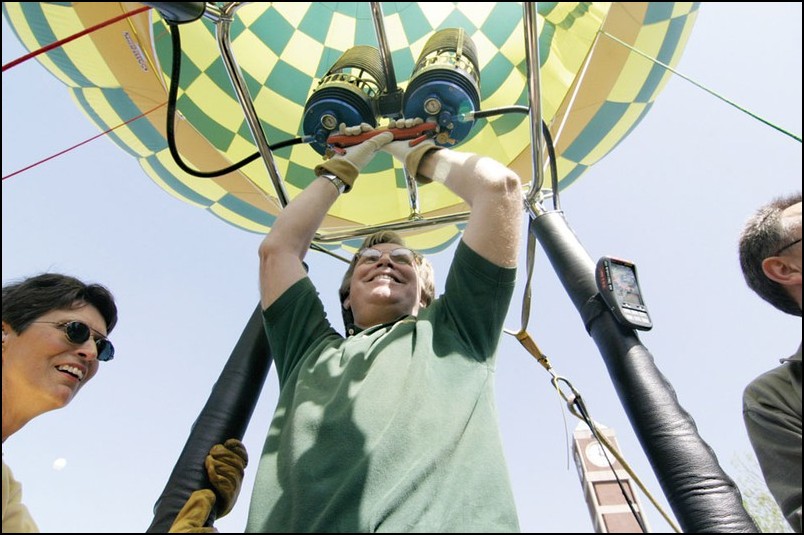
In observation of April 22 Earth Day 2006 celebrations, the SAB organized the lunch and accompanying attractions. In addition to several giveaways, the event featured informative display boards and representatives from Whole Foods Market and Kentuckiana Air Education. Hot air balloon rides were scheduled, but were cancelled due to wind. A “dirty sock” contest was also held. Clean socks were provided for students to place on the tailpipes of their vehicles. The student with the cleanest car emissions – evidenced by a clean sock – won a bicycle and the owner of the dirtiest won a free tune-up.
Miranda Mattingly, chair of SAB’s special interests committee, said SAB has coordinated the event for the past three years. She added that during that time there hasn’t been and still isn’t a recognized student organization dedicated to environmental or earth-friendly endeavors.
Earth Day’s roots stretch back to 1970 when Sen. Gaylord Nelson of Wisconsin called for nationwide demonstrations and rallies to encourage environmental preservation. This year, Earth Day Network, an international organization that works with over 12,000 partners in 174 countries, has 20,000 events registered worldwide like the one at U of L.
By the event’s end, nearly 300 people munched on the food and picked up free products. However, for much of the time, the display boards featuring facts about environmental hot topics such as global warming, water contamination, air pollution and fossil fuels, drew few observers.
“At many events where there’s free food, people want to focus on that,” said Julie Webb, SAB’s graduate assistant. “All we can do is make the information available for them as an option.” She added that it is students’ initiative to take advantage of the resources provided.
“We’re trying to educate people that there are simple things that they can do [to help improve air quality],” said KAIRE’s public information supervisor, Matt Stull. Stull said Louisville, because of its location in the Ohio River Valley, has significant air quality issues, especially during the summer months. He added that Louisville is currently not meeting federal air-quality standards.
KAIRE provided brochures with information about air quality improvement.
“Information about the local environment and how individual actions impact it is very important,” stated Phillip Buckland, Earth Day Network’s communication manager.
Freshman political science major Steven Meeks, who was among many waiting in line outside the Red Barn, admitted that he pays little attention to environmental issues. He added that if such issues affected him directly, he might take more notice.
Freshman chemistry major Jazmin Vega Velez had never tried organic food before. She thought that the term “organic” might mean healthier food that doesn’t taste good. Even so, she sampled some quesadillas and said they were “really good.”
The food was provided by Whole Foods Market, a national grocer focusing on natural and organic products. Organic foods are grown without use of environmentally harmful pesticides and herbicides.
“If I had more money, I would shop at Whole Foods,” said junior psychology major Erika Suzuki. Suzuki, who was raised eating natural and organic foods, expressed a sentiment common among people who lament the often-higher prices of natural and organic goods.
“We try and teach people how to make the switch to a natural lifestyle within any budgetary guidelines,” said Erin Jones, a Whole Foods Marketing Specialist. She said that Whole Foods personnel give store tours and work with customers one-on-one to find affordable dietary solutions.
Although no trees were planted, U of L’s contribution to the Earth Day festivities exposed students to environmentally conscientious ideas.
“Keep the earth healthy and yourself healthy,” Webb said.