By Josie Simpson
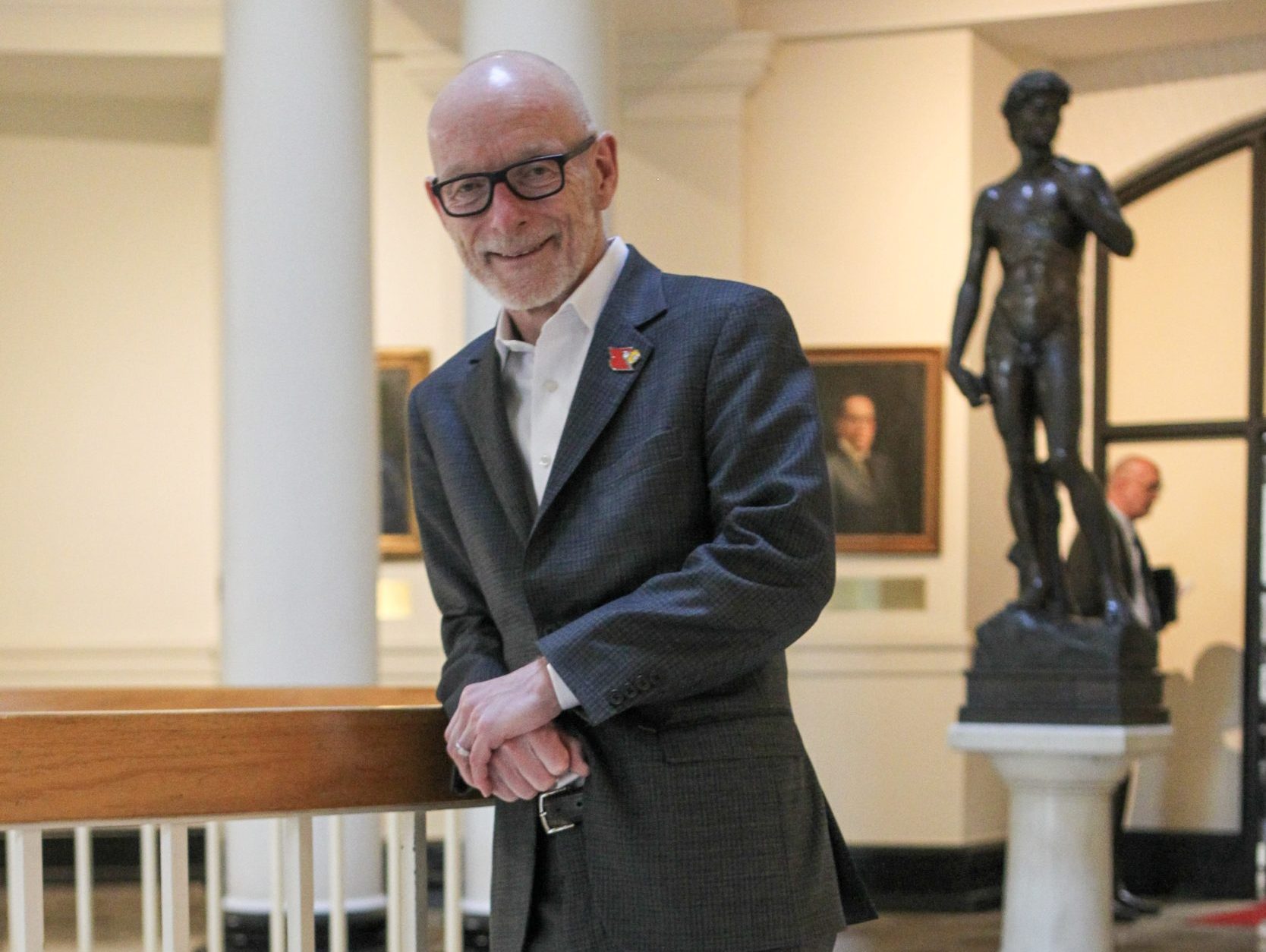
Amid financial challenges and new investments, University of Louisville President Gerry Bradley sat down with The Cardinal to discuss recent changes and the future of the university’s programs.
ELC closure reflects ongoing financial struggles
A controversial issue on campus this semester was the university’s decision to leave the Early Learning Campus.
Bradley said the program originally ran through the provost’s office before it moved to the College of Education around 2018-2019. The shift was meant to bring financial sustainability and connect the daycare with education students.
But even with that change, the numbers didn’t improve the way they’d hoped. The ELC kept losing money each year, and its expenses continued to outpace its revenue.
“At some point, we had to come to terms that the math just wasn’t going to add up,” Bradley said.
The university couldn’t expand because staffing levels, student workers and strict accreditation standards capped enrollment.
Bradley described the program’s educational impact as small. Student employees are spread across various sites, meaning the ELC isn’t the primary provider of their education.
“Although a great service, and obviously it impacts families to have it, it’s not a core part of what we do in education,” he said.
He added that closing the ELC doesn’t free up new funding for scholarships or other initiatives.
“There is no money, per se, that will come from that decision, but it clearly has been offloaded somewhere on the pressures of the budget,” Bradley said.
Still, he emphasized the university’s focus on student support, pointing to the Cardinal Commitment Grant, which the university has already invested more than $8 million in, with another $4 million to come.
Families were notified shortly before a broader campus email, which led to frustration. Bradley said earlier communication could have risked leaks and unnecessary panic, especially with potential staffing changes involved.
“It’s a difficult thing to navigate when you’re dealing with these delicate situations,” he said.
Clearing the air on program reductions
The Pan-African Studies doctorate program is on pause to focus on rebuilding its undergraduate program. The decision was made under a 10% reduction in graduate programs across the College of Arts & Sciences. Backlash followed though, as PAS faculty claimed it would disproportionately affect their program.
Bradley cited notable enrollment declines and minimal PhD applications for the PAS reductions.
In all, U of L reduced 12 PhD-level Graduate Teaching Assistant roles positions across five programs. Math lost one position. Humanities, Sociology and Urban and Public Affairs lost two positions. And five were removed from Pan-African Studies.
At the master’s level, GTA cuts removed one position from Anthropology, Communication and Women’s, Gender and Sexuality Studies. Philosophy and Theater Arts lost two, and English lost six. Political Science saw a partial reduction in support to one of its graduate positions.
“It wasn’t just as if we had targeted one program,” said Bradley.
The goal is to support the programs’ growth, not eliminate them entirely, he said.
He also spoke about meeting with Dr. Ricky Jones, a current professor and former director of the Pan-African Studies program. Bradley said he valued the conversation and the opportunity to clarify that he wants the program to thrive.
“We’re not here to see any program that has such a history disappear.”
However, with decreased support from the state, U of L’s budget and the stability of its programs remain a key concern. The College of Arts & Sciences in particular is preparing for “significant” budget reductions in the 2026-27 academic year. It is unclear what cuts will follow, but administrators must make a decision by July, when the Board of Trustees votes on next year’s budget.
The value of student voices
Bradley congratulated the winners in the recent SGA election, calling his work with student leaders a rewarding, collaborative process.
“We don’t always agree on things, but I always appreciate what they bring to the table,” he said.
Most institutions do not have a student representative on the Board of Trustees, so Bradley is glad U of L does, adding that student input has long played an important role in university decisions.
“There’s nothing like meeting with students to remind you why you’re here,” he said. “This is what we’re all about.”
He also praised current SGA Student Body President Macy Waddle for her role in moving the Campus Health Services center to the Miller IT Building. If a student wanted to visit the previous location, it would be a 20 minute walk. The change will centralize student care and improve accessibility.
While the project comes with a $10 million price tag, Bradley said he believes it’s the right call.
“I think it’s really what students have asked for, and it will absolutely meet that need,” he said.
Photo by Vinny Porco / The Louisville Cardinal