By Vinny Porco
When I was a freshman, I opened the email to vote in the 2024 SGA General Election and found a ballot of names completely alien to me.
I was, just like 77.5% of U of L’s Fall 2025 student population, a commuter.
Things have improved, at least in my case. I knew a few candidates on the 2025 ballot, and I’m quite familiar with the 2026 one. But I’m an editor for The Louisville Cardinal, U of L’s premier student publication. It’s my job to have a finger on the pulse of the student body.
Do I live up to this? Talk amongst yourselves for that one. But I talk to other commuters. I share a parking lot with them and ride the bus with them twice a day. Many of them feel out of the loop about elections and SGA.
It’s understandable. The college commuter mindset can be defined by the phrase “get in and get out.” Go to class, do your homework, eat whatever the Ville Grill has out and go to work.
And understandably, SGA candidates often prioritize students who vote.
Appealing to this voter base is, and has been, a tried-and-true strategy. Build an aesthetic social media campaign, post flyers and yard signs around campus and set up tables to talk with passing students about platform issues. You might catch some of us commuters while you’re at it.
But more can be done to reach a wider scope of students, and the fruits of these efforts can potentially swing elections.
You can likely see what this is amounting to. Turnout in SGA elections is low, sort of.
The Data
The Louisville Cardinal recently obtained nine years of SGA election results via an open records request. Data from the 2017 SGA General Election shows that 19.45% of 19,709 surveyed students voted.
The next year, 2018, saw a drop to a 15.66% response rate out of 19,961 students.
Fast forward to 2024, and the voter response rate for that year’s SGA General Election was down to 10.46%, with 2,160 students voting out of 20,644 surveyed.

SGA General Election Data graphed from 2017-2024. The Louisville Cardinal did not receive General Election results from 2019. (Vinny Porco / The Louisville Cardinal)
While my goal in this article is not to discuss the decrease, it’s important to know that it’s not unprecedented. In 2023, one peer-reviewed study found that, on average, the percentage of undergraduate students voting in student government elections at surveyed institutions increased from 17.9% in 2011 to 18.42% in 2020.
However this small fact does not represent the incredibly large range of voter turnouts that likely result from different student governments having different methodologies.
Even though average voting went up by about 0.5% from 2011 to 2020, voter turnout at most schools fluctuated several percentage points. A few institutions even saw dramatic swings.
For instance, the voter participation percentage at the University of Alabama fell by 27.92% from 2011 to 2020. However, Miami University saw 25.54% more voters in that span.
Many schools surveyed sat in the teens and low-to-mid twenties, while some were as low as the single digits.
So U of L’s 10-20% SGA election turnout is comparable to other universities and doesn’t fall into any extremes. But SGA candidates still shouldn’t accept a voter base of around 10% – especially since it has nearly halved since 2017.
After all, student governments are meant to be a microcosm of the United States government. This is a country whose comparably low voter turnout sits around 60% for presidential elections and 40% for midterm elections in recent decades.
The Point
Here are my two cents on election strategy. While others are fighting over the 10% of students that vote, a smart SGA candidate should target the 90% that don’t.
Who makes up that 90%? It’s mostly commuters. The data is not readily available, but even if the 2,000-or-so voters were all commuters, the remaining 90% would still largely be commuters.
Fall 2025 enrollment data obtained by The Louisville Cardinal shows that out of 25,005 students, 19,381 are considered “commuter” students.
Commuters are 77.5% of U of L’s student population. SGA candidates in the 2026 General Election should gun for those unrealized votes.
Get commuters to care. Talk to commuters. Survey them about commuter-centric issues, tailor some of your platform issues to their needs and meet them where they’re at.
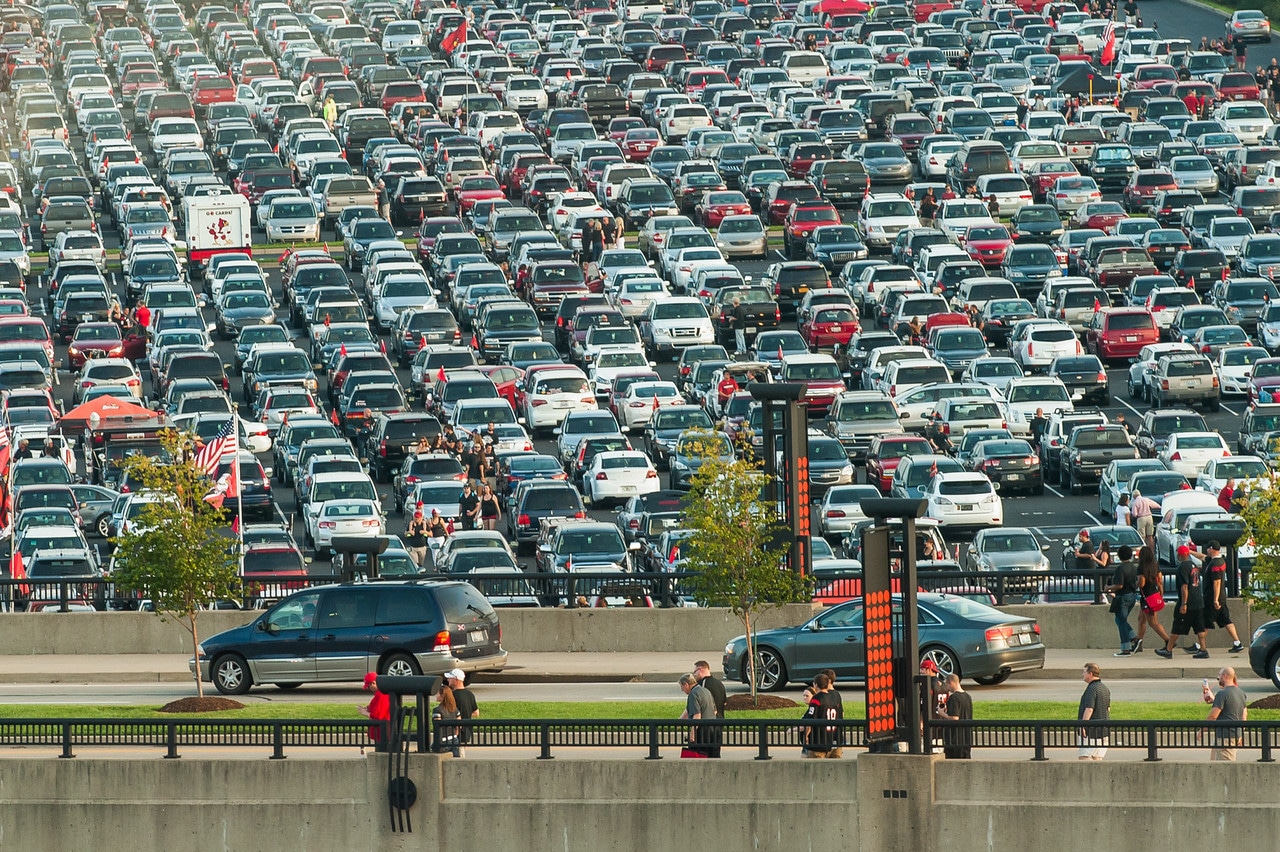
Where are they? At some point in the day, most of us make our way to the parking lot. Start there.
If a single candidate took the time to table at the purple lot in 2024 or 2025, I would’ve been thrilled to take 30 seconds out of my day to open up the voting email and cast my ballot for them.
It’s going to be warmer next week. No excuses.
File Photo / The Louisville Cardinal