 By Brian Ray
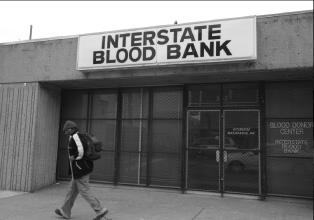
PlasmaCare, Inc. of Cincinnati has begun discussions concerning a long-term lease that would bring a blood bank, able to serve an average of 1,200 donors per week, to the corner of Fourth St. at Industry Rd.
The notion of a new bank has received some negative feedback from some in the community.
The proposed PlasmaCare site would be directly across the street from the “green monster” industrial warehouse and according to Andrew Owen, part owner, the initial behavior of PlasmaCare has made a negative impression on him.
Owen said his contact with PlasmaCare’s representatives has taught him that they talk about being a good neighbor and how much they bring to the community, but when asked to have a public forum with students, neighbors, city leaders, etc. to introduce themselves properly, they have declined.
The idea of a plasma bank has drawn mixed reactions from U of L students thus far.
Thomas Newman, a junior marketing major, does not see a problem with the new addition.
“I’m not concerned,” Newman said. “Before Gray’s expanded a few years ago, there was a plasma center where half the store currently sits. It wasn’t a big problem then and I doubt it will be again.”
Lindsay Luckett, a junior nursing major, expressed concern about the bank as she feels some plasma banks are unsanitary.
“I have been an avid blood donor since the age of 18,” said Lindsay Luckett a junior nursing major, who donates to the Red Cross. “I really try and do it every time I have the opportunity. I am not too sure about giving plasma though, it just doesn’t seem sanitary. The places themselves are not that appealing, and I wouldn’t know what I would be walking into. It’s just not something that I truly trust.”
Phillip Bressoud, Executive Director of Campus Health Services at U of L, said that plasma banks have become a popular presence around college campuses and inner cities.
“Inner-city low income areas offer the unemployed and homeless?easy access to cash in exchange for their plasma,” Bressoud said. “There is often a line of homeless men and women in front of the building near our medical school prior to its opening each day.”
Bressoud said the quality of plasma obtained in this manner is going to be less desirable than that from other sources due to the poor nutrition, IV drug abuse, alcoholism and chronic diseases.
Owen also feels that the blood bank is one of many steps to commercialize the surrounding campus community.
“The revitalization of the Fourth St. commercial corridor that runs from U of L south through Winkler and on through Central Avenue is the next piece,” Owen said. “The city, at the urging of 15th District Councilwoman Marianne Butler, is completing The University Corridor Study, which will focus on development opportunities along this corridor.”
There has been significant progress in the areas directly south of U of L’s campus which includes Central Station, Patterson and Papa John’s Stadiums, and the renovation of Churchill Downs.
According to Butler, “revitalization of the area is important to Metro Government and we want to keep the momentum going that U of L and Churchill Downs started.?We need to work on development between the two so the area will thrive once again.”
Regardless of expansion, the concern of students like Luckett still remains.
William Lockwood, Clinical Professor at U of L Hospital and Director Transfusion Services & Tissue/Bone Bank, allayed fears slightly when he said that all human blood component collection agencies must screen their donors whether paid or not with approved health/social questionnaires and infectious disease testing. Also, plasma centers and blood banks must be licensed and inspected by the FDA and follow all the regulatory rules.