 By Mariana Leon Smith
Topics like massive increases in carbon dioxide emissions, the melting of the polar ice caps and the indiscriminate use of non-renewable resources may not be what college students talk about over morning coffee at the library.
But maybe it should be.
It is becoming a common belief that global warming is real, and it is a problem that will continually get worse if nothing is done to resolve it.
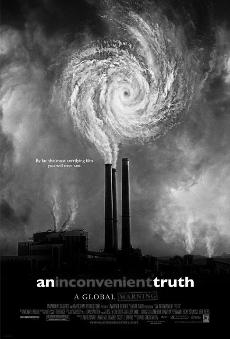
The 2006 movie “An Inconvenient Truth” sparked a nationwide interest in global warming, and celebrities such as Leonardo DiCaprio, David Letterman, Keanu Reeves and Brad Pitt have recently spoken out against the phenomenon.
There are many actions that students can engage in their everyday lives to make this world a “greener” place.
Here are a few changes that a student can make that will not only help the planet, but the wallet as well:
4Use compact fluorescent light bulbs (CFLs) instead of the regular incandescent kind. These CFLs use 60 percent less energy than regular light bulbs.
4Use thermostats wisely. Installing a programmable thermostat will not only save energy, but money as well. Also, raising the thermostat one or two degrees during the winter and then lowering it one or two degrees in the summer is also a proper adjustment
4Switch to local and organic foods. Since foods that are grown and produced locally do not have to travel long distances, students will be helping to save a lot of energy in transportation. Also, not only will organic foods keep harmful chemicals off the soil and the environment, but they will keep harmful chemicals out of and off your body,
4Recycle. For example, instead of buying water bottles by the dozens each month, reuse one bottle and refill it at the university; it will save money and save the environment as well.
4Companies such as Hewlett Packard make recycling easy. They pack a postage-paid envelope inside their print cartridges to mail the old print cartridge for recycling.
4Buy and use energy efficient appliances. The “Energy Star” label will tell students if the appliances are energy efficient. The label can be found on anything from computers to air conditioners. When using the dishwasher, make sure it is a full load, and use the “energy-saving” setting if there is one. Appliances and gadgets that run on alternative energy, such as rechargeable batteries, water power or solar power, are not only cool, but affordable as well.
4Save electricity and water. Whenever possible, take shorter showers and use cooler water. Hot water takes a lot of energy to heat. When electric appliances are not being used, unplug them. Turning off the light, the computer and television when not using will save a lot of energy and money.
“A lot of students, when they go from room to room, forget to turn off the lights or the TV, and they don’t realize how much energy is going to waste,” said Thomas Cheng, a junior finance major.
Aileen Rodriguez, a junior marketing major, said she believes that students pass opportunities to help the planet on a daily basis.
“Every single day, we drink from water bottles and soda cans, and throw away stray papers, and forget that we can place them in special recycling bins.”
Green Thumb, a local environmental organization, is coordinating an April 14 bike ride from the U of L West Lawn to the Mazzoli Federal Building on Sixth Street between Broadway and Chestnut to demand Congress “steps up” their commitment to global warming solutions.
The event, “Step It Up 2007” will start at noon and end at 5 p.m. Participants are encouraged to bring an old t-shirt to decorate with slogans, and then bikers will move en masse downtown.
The downtown rally will be a large action coinciding with over 1,200 others across the country. The event will feature information booths, speakers, Rep. John Yarmuth (D-Ky.) and a march.
For more information about “Step It Up 2007,” visit http://www.stepitup2007.org.