 By Chas Kuhn
The National Association of College Stores reports that an average student will spend more on books in one semester than most third-world families earn in a year: $900. Text books are expensive and they continue to cost more and more each year.
According to a new study by the state Public Interest Research Group, college textbook prices “have increased at nearly four times the rate of inflation” for all finished goods since 1994.
The Internet has birthed online text book Web sites that sell textbooks aimed to save the consumer money and offer the convenience of efficiency.
University of Louisville junior Nicole Kircing has been buying her textbooks online for four semesters. Kircing said, “They are a lot cheaper and the money goes back to an individual instead of a [private] company.”
Kircing usually checks the University Bookstore Web page before school starts to verify the correct texts to purchase. Since she orders them at least a week ahead of time, she doesn’t need to worry about getting her textbooks after two or three class meetings, which is one reason “bricks and mortar” advocates may choose to shop and walk in the same day.
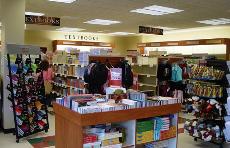
Bricks and mortar refers to the physical structure that sells books, and is a nickname for book stores.
Since books tend to be bulky and heavy, shipping costs can be a concern. “Shipping charges on http://www.half.ebay.com only adds up to a couple dollars,” said Kircing.
The NACS is the trade association that represents the higher education retail industry, an industry that grosses more than $10 billion annually. A Student Watch report published in late 2005 stated, “In spite of the attention paid to online sales of books and course materials, students reported purchasing only 23 percent of their textbooks online.” The Internet sells everything with success except for textbooks.
Vitaly Makievsky, senior economics major, doesn’t buy his text books online. “It seems like a big hassle. I don’t even know if it’s a good deal,” said Makievsky, adding that he can save money on books by not buying any at all.
“I went through a whole class without a text book and ended up getting a B,” Makievsky said.
The Internet increases competition which tends to keep prices lower. Searching for a textbook online may reveal to the Internet consumer sites for the lowest price. Heading to a book store out of habit, tradition or both, beats out the knowledge of better deals in cyber-space. Locally the price of a textbook may not change much, but online the price can be cheaper by as much as 20 percent, and maybe more if the text is a used one.
For example; the anthropology textbook, “Images of the Past” sells for $89.10 at Gray’s Bookstore, while at Amazon.com, it sells for $64.02.
The competition online isn’t competing with one or two stores in two or three zip codes. A seller online is competing with many more sellers, and in that case the consumer always has the advantage.
Chris Merrifield, director of operations at Gray’s College Bookstore, said, “A decision was made years ago that the Internet is really not our competition.”
College bookstores like Gray’s seem to have a large market share built on years of consistent service and word of mouth advertising.
Gray’s bookstore and other bookstores in the area can offer customers face to face customer service compared to an online seller. Merryfield believes that this difference keeps customers coming back.
Merryfield said, “One thing bricks and mortar stores can do is provide great service and a return policy that probably you wouldn’t get online.” Shopping local eliminates high shipping costs and inconvenient waiting times, Merryfield said.
While Merryfield admits that lower prices for similar textbooks are likely to be found online, he said, “We are more into service instead of discounting textbooks.”