 By Alex Bradshaw
The university’s commuter program, currently supported by the Student Government Association, will soon receive its funding entirely from the Student Affairs office.
ACCESS, Adult Commuter Center Evening Student Services, has been funded by the student body for the past three years because of the Student Government Association’s decision to incorporate a phase-out plan to fund the program for four years. In 2000, then-SGA President Jason French instituted a $3 tuition increase to support the program.
“When ACCESS was threatened of being cut from the university budget many years ago … SGA picked up the bill with the understanding that eventually the university would pick it back up again,” said Nathan Haney, executive vice president of the SGA. The concern was that the money also pays for the salaries and benefits of the employees of the organization.
“SGA made a deal with ACCESS years ago that phased ACCESS out of the SGA budget because the SGA didn’t want to have to deal with personnel matters.”
The plan ends after the 2005-06 school year, but because Student Affairs will be picking up the bill, ACCESS will not lose any funding.
Because of the agreement, ACCESS Director Barb King is optimistic about the program’s future. “There have been no major budget cuts from the SGA’s proposals in the 11 years that I have been doing this,” she said.
Even though the funding has always been there, she has found challenges in working under the SGA. “It’s hard working for a different boss every year,” she said, referring to the fact that there is a new SGA president every year.
She still appreciates the SGA’s support, however. “In fact, due to the SGA’s interest in ACCESS, they are probably one of the main reasons that we are still around,” she said.
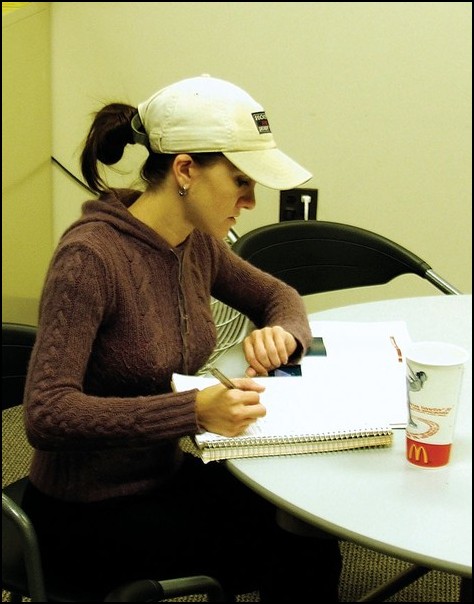
ACCESS began as a way to help commuter and non-traditional students make career decisions. Located in Davidson Hall room 105, it also provides an area to study.
“This is a meeting place for students just like me,” ACCESS user Jackie Ross said. “If I am feeling stressed out and alienated by a younger student body, I can come here and discuss that with people who can relate.”
With 400 students enrolled in the program and the SGA behind them, ACCESS doesn’t expect to find problems in receiving funding. “Just looking at the Student Affairs and the support of the SGA’s track records, we feel very confident about the future and are not worried about finances,” King said.
“We will continue to help where we can,” Haney said.