 By Sasha Williams
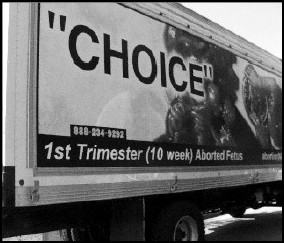
College students find relatively few images shocking, but the 8-foot- wide, 22-foot-long photographs of aborted fetuses printed on semi-trucks circling the Belknap campus Oct. 5 turned the heads of even ordinarily unshockable onlookers.
“They were disgusting. They were graphic. Those trucks were gross!” said freshman Amanda Temple.
The pictures were part of the Reversing Roe v. Wade Tour, which visited six states and seven universities in three weeks. The tour was completely mobile. The trucks only stopped at red lights. No speakers accompanied the trucks, and practically the only text that appeared with the pictures were the words “choice” and “first trimester.”
The bloody images, which came from abortion clinics, were meant to be disturbing, according to executive director of the tour Mark Harrington.
“We are purposely trying to bother people in order to get them to think,” Harrington said. “We can’t buy static billboards or ad space.”
Harrington said that more people can be reached with a mobile tour anyway. He also said that it’s harder for people to protest the moving images.
But some students weren’t impressed. “I do think it’s important for people to know the actual process, like what happens in an abortion, but I don’t feel like those pictures are the wisest way of doing it,” U of L sophomore Staci Calamaio said.
College students are the target audience for the tour because of their ability to influence politics in the future.
“College graduates will be running this country in the near future. If Roe v. Wade is overturned, they will be in a position to outlaw abortion in their respective states,” Harrington said.
“That’s a good point,” U of L sophomore Matt Wright said of Harrington’s philosophy. “We are the future leaders of the world, and we might influence it but – people are still going to get abortions.”
Wright said he doubts displaying graphic images on public streets will affect many people’s opinions. “It’s wrong,” he said. “Nobody deserves to have that forced upon them.”
The tour, sponsored by the Center for Bio Ethical Reform Midwest, was funded by private donations. The protest was held for the first time this year, and the center plans to hold the tour annually.