 By Phillip Bailey
Brothers Reaching Brothers, a community forum hosted at St. Stephens Baptist Church on Sept. 17, was a much-anticipated effort. It was a chance for seventeen of Louisville’s most prominent black leaders from various and contradictory philosophies to dialogue with their community in search of solutions to increasing local homicides and continued racial inequity. Now that it’s over, perhaps we can openly and honestly discuss the positive and negative transactions that followed.
The buzz surrounding the forum was heavy at the start. Like all communities, black ones usually adhere to a leadership-oriented model, with influential individuals steering decisions for groups of people. “This was a large forum, bringing some constituencies together that normally wouldn’t come together,” said U of L professor Dr. Ricky Jones, a panelist who co-sponsored the event with Rev. Kevin Cosby, senior pastor of St. Stephens and President of Simmons Bible College.
Rather than a panacea to black life in Louisville, Dr. Jones added that the forum would be “more symbolic than substantive” because the “substantive work comes later.” I think we should be mature enough to have expected that. “Brothers Reaching Brothers” was honestly a belated first step.
Don’t misunderstand; the symbolism was not all bad. The forum, which was a partnership between Simmons Bible College and the Pan-African Studies department of the University of Louisville, marked the first public collaboration between radical and conservative streams, particularly Rev. Kevin Cosby and Dr. Ricky L. Jones. That’s refreshing, considering that black male leadership develops like heavyweight prizefights. Two black men always battling for ideological primacy: rarely do these battles transform into a mutual understanding or cooperation. Frederick Douglass, the abolitionist who advocated emancipation and integration, and Martin Delaney, the father of black nationalism who advocated repatriation to Africa, worked together briefly on the North Star newspaper. But usually we’re left with discussions of “what if” that take place posthumously. Now, for perhaps the first time, a productive partnership between two black leaders, the preacher and the professor, is on the horizon.
From that gentle symbolism a real test was ushered into the public sphere for Jones, Cosby and the entire panel. When and how does the substantive work begin? At the Colloquium on Political Philosophy of the Center for Theoretical Study, professor Eugene Webb of the University of Washington presented a paper entitled “Political Symbolism and the Ambiguity of Political Community: An Inherent Dilemma of Politics.” Webb explained that political community is hard to form because it requires “an act of transcendence, a reaching beyond purely private and individual interests toward a shared life in a larger world.”
That transcendence is never perfect. First, “individual interest subverts [transcendence] from within,” said Webb. Black leadership of all ideological hues in Louisville has failed mainly because they cannot overcome juvenile egoism in times of crisis.
Secondly, “each community tends to re-enact – the egoism of the individuals who find their social identity in it,” Webb continued. Ministers often lob knee-jerk moral evaluations and activists thump ghetto populism. Elites talk endlessly about rugged entrepreneurialism while my peers desperately cling to a depoliticized hip-hop culture.
The battle is on the three fronts, according to Rev. Cosby: institutional racism, personal transformation and communal self-sufficiency. Unless discussion of that political community is formed, our belated first step will be our last.
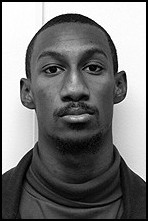
Phillip Bailey is a senior majoring in Political Science and a staff writer for The Louisville Cardinal. Contact him at: pbailey@louisvillecardinal.com