 By Matt Thacker
When students enroll in college, they do so under the assumption that the long-term benefits of receiving an education will outweigh the cost of tuition. However, one former college professor believes that a local college is not living up to that standard.
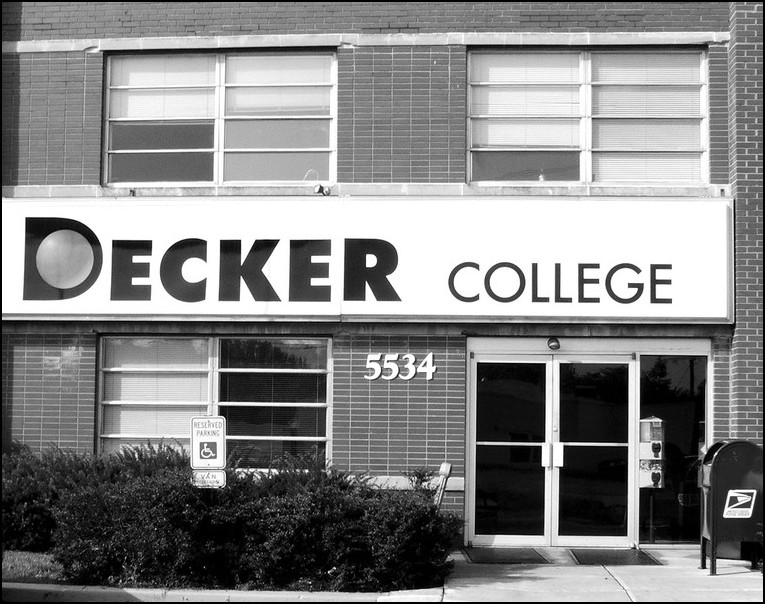
Brian Vandenburg taught at Decker College, a for-profit institution based out of Louisville with campuses in Indianapolis, Jacksonville and Atlanta, for nearly four months before he was fired on July 15, 2004. His termination letter stated that they fired him for “misleading and negative commentary to the student body.” Vandenburg maintains he was fired for simply telling students the truth.
In fact, Vandenburg said he knew from his first day working at the trade school that something was wrong. In a signed affidavit, he testified that Campus Director Leo Bogard told him in private that students could get a full refund until the third day of classes.
“This is about money,” Bogard reportedly said. “So I would like to see them get past that time, so I could at least get something.” The next day, a contractor visited with the promise that he would hire the entire class. Vandenburg said this was intended to keep the students enrolled for those first three days. The contractor ended up hiring no one from the class.
Vandenburg alleged that the school violated several regulations of the National Center for Construction, Education and Research which provides curriculum and certification for Decker. He claims that instructors would give open-book exams and allow students multiple retakes, sometimes the same day as the original test.
Vandenburg also accused Decker of intentionally deceiving investigators from the Kentucky State Board for Proprietary Education and claiming to give military veterans benefits when they had not been approved to do so.
“I’m a former veteran, so that really ticked me off,” Vandenburg said. “They prey on low-income people who are just looking for one last chance.”
Eight students have filed a lawsuit worth more than $200 million against Decker for allegedly being misled by recruiters. In the lawsuit, the students claim that they were led to believe that Decker would help them gain certification to become electrician, although Decker admittedly does not. Vandenburg said that students wanting to become certified or earn credits to use at other colleges gain nothing from attending Decker, which charges $10,000 for a four-week on-campus program followed by an online course.
Workers at Decker’s National Turnpike campus deferred questions to their corporate office. Rusty Henley, the legal counsel for Decker, said it would be inappropriate for him to comment while litigation is ongoing. Decker currently has a lawsuit against Vandenburg for spreading false information.
Two men who were standing in front of Decker’s campus identified themselves as students at the college, but declined to give their names. They said their experience had been “mixed.” Although both men said they were aware of other students being misled in the past, neither had ever felt misled by Decker recruiters or instructors.
One student said that instructors sometimes seemed unprepared, but he also added that at times he has had good experiences. When asked whether the classes had been beneficial, he said, “Oh yeah, it’s going to help in the long run.”
Decker College is also under review by the Kentucky State Board for Proprietary Education and the Better Business Bureau. Charlie Mattingly, president of the local BBB, said they have had 12 closed complaints regarding Decker within the last year, mostly from students who claim they were promised jobs they did not receive. He said because Decker, as a trade school, is relatively new, no report ha been filed about them. However, he said there have been enough complaints that it warrants a review of their file, which will probably happen soon.
Mattingly also said that Decker has the same basic management and even once shared a phone line with Franklin Career Services, which has an “unsatisfactory” rating with the BBB. Decker legally separated with Franklin after it was hit with several lawsuits. Mattingly said Decker school officials promised the BBB would not see the same problems in Decker as they did in Franklin.
“The proof will be in the pudding,” Mattingly said.
Alex Wittig, associate executive director for the Council on Occupational Education, said Decker is currently under review by the COE as well.
He said Decker has been issued a letter requiring that it explain the high number of student complaints by Sept. 15. Wittig said that the Council will meet before the end of September to decide whether Decker can keep its accreditation.
All schools must be accredited by a federally recognized agency to receive Title IV funding. Currently, the COE is the only accreditation Decker lists that the U.S. Department of Education recognizes.
This means that if Decker loses its accreditation with the COE, it could also lose its Title IV funding. If Decker loses this funding, students would no longer be able to receive financial aid from the federal government.
The Associated Press reported on Aug. 26 that the U.S. Department of Education has placed Decker on “Heightened Cash Monitoring 2,” meaning the college must provide documentation of its disbursements before receiving Title IV funding.
“Students considering Decker should be aware that they’re not necessarily going to get a job,” Mattingly said. “We encourage any students who feel they were over-promised to file a complaint.”
Vandenburg also fears that a group wanting to overturn the “90/10 rule” will make it easier for fraudulent universities to exist.The law commonly called the “90/10 rule” states that an institution must receive at least 10 percent of their revenue from sources other than federal financial aid programs.
In July, the House of Representatives Committee on Education and the Workforce approved a renewal of the Higher Education Act with some changes.
The original bill, submitted by Rep. John Boehner (R-Oh.), strongly called for the removal of the 90/10 rule. Although that part of the bill was overturned in committee, Vandenburg worries that groups with similar goals are gaining momentum.
Vandenburg believes that the rule helps prevent fraudulent schools from faking enrollment numbers to gain federal funding. But Boehner stated in his proposal that the rule hurts low income students who typically attend trade schools.
Vandenburg argued that any legitimate school should be capable of receiving at least 10 percent of its funding from outside sources.