 By Matt Morris
Former U.S. Secretary of Defense talks world security at U of L
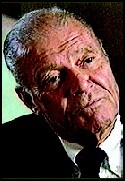
At a University of Louisville lecture on Monday in Floyd Theater, former U.S. Secretary of Defense Robert McNamara spoke about the current state of world security.
McNamara boasts an impressive record in national involvement, which makes him a key mind in the global spectrum of conflict and security. McNamara graduated from the University of California in 1937 and received an MBA degree from Harvard in 1939; he returned to Harvard in 1940 to become an instructor and, later, Assistant Professor of Business Administration. In 1943, he was commissioned a captain in the Air Force and served in the U.K., India, China, and the Pacific. He was awarded the Legion of Merit and promoted to lieutenant colonel before going on inactive duty in April of 1946. Upon his discharge from the Air Force, McNamara joined the Ford Motor Company; he was elected as a director of the company in 1957, and president of the company in 1960. At the request of president-elect John F. Kennedy, McNamara agreed to serve as Secretary of Defense of the United States, a position he held from 1961 until 1968. He became president of the World Bank Group of Institutions in April of 1968; he retired in 1981. Since his retirement, McNamara has served on a number of boards of directors for both corporations and nonprofit associations. He writes and speaks on many topics, including population and development, world hunger, the environment, East-West relations, nuclear arms, and his vision of our nation in the 21st century. McNamara is also the author of several books, including The Essence of Security, Blundering Into Disaster, Out of the Cold, and In Retrospect.
The overall tone of the lecture about world security was simply that there is room for a great deal of improvement. The most effective form of help, however, is debatable. World security has been a topic of debate for years, but for Americans, the risk has escalated since 9/11. The newfound militant role that Al Qaeda has adopted has caused considerable alarm among world officials. Currently, twenty five countries are listed by the State Department as hazardous, and U.S. citizens are advised to avoid them in world travels. McNamara addressed the country’s own war with terrorism and its ramifications on American safety. Another concern that has the U.N. taking action is the arms inspection of Iraq. The inspections have been interrupted constantly over the past four years, and only recently have the inspectors been given the chance to visit three cities outside Baghdad to resume their investigation. These random fits of difficulty that Iraq has had within the past year have concerned many Americans as President Bush continues to contemplate different forms of action against the misconduct. These issues seem to be just a window into the numerous conflicts taking place around the world that need to be addressed by the U.S. and the U.N. in an effort to improve not only homeland security but global security.
The lecture was sponsored by the Muhammad Ali Institute for Peacemaking and Conflict Resolution, and it served as a great opportunity for students to listen to a credible figure speak of issues on global security of which every citizen should be aware.