 By Sarah Weller
Opening at the J.B. Speed Art Museum this Wednesday, November 6, is the collection “Millet To Matisse: Nineteenth and Twentieth Century French Painting From Kelvingrove Art Gallery, Glasgow, Scotland.” The Speed Museum is the first location in the U.S. to be hosting this remarkable exhibition of French art, which will be stopping in only six cities in North America. “Millet to Matisse” features 64 paintings from the Kelvingrove Art Gallery, many of which have rarely been seen outside the country of Scotland. These paintings cover the areas of Impressionist, Post-Impressionist and Modern periods and include works by many well-known artists, such as Courbet, Bonvin, Fantin-Latour, Lapage, Corot, Monet, Pissaro, Cassatt, Signac, Luce, Seurat, Bonnard, Vuillard, Picasso, Braque, Gauguin, van Gogh, Cezanne, and Derain.
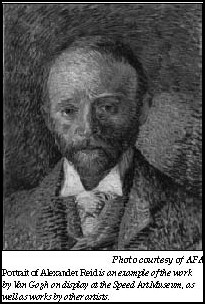
Organized into seven categories, the collection opens with “Figures Out of Doors,” the work of artists from the Barbizon School, including a piece from Jean-Francois Millet titled Going to Work, which shows the typical peasant life in an agricultural setting of the 1800s. Next is a section entitled “Landscapes,” which shows the development of Impressionistic art, including works from Monet, Renoir, and two early pieces from van Gogh and Gauguin. Most interesting was a rare piece from Pablo Picasso, The Flower Settler, which he painted at the age of 19 in 1901. The section “Viewpoints” includes many village scenes by Hervier, Boudin, van Gogh, and others. The most exciting of this section were Vollon’s A Corner of the Louvre and Pissaro’s The Tuilenes Gardens, which portrays urban subjects in Paris. “Light on Water” contains paintings depicting the beautiful reflection of light off of water through controversial paintings by a group of artists known as the “Fauves” or “wild beasts,” including de Vlaminck, Derain, and Matisse. Artists like Vuillard in the “Interiors” section concentrated their work on the inside of homes and the people living within. During the late eighteenth and early nineteenth centuries, more artists from the Barbizon school like Courbet, Cezanne, and Renoir painted in the theme of “Still Life:” the section includes many depictions of flowers and fruit. Notably, Fantin-Latour began to specialize in the painting of roses toward the end of the 19th century. Other artists whose work was included in this section were Matisse and Braque. The final section of the wonderful exhibit was “Portraits,” including the work of Cassatt, the only American included in the Impressionist group. Her portrait The Young Girls is a sensitive portrayal of women and children. Roualt depicted his inner visions through the portrait Circus Girl. The portrait by Matisse in this section, Women in Oriental Dress, shows Matisse’s influence from his a visit to Morocco. Van Gogh’s Portrait of Alexander Reid was thought to be one of his many self-portraits until 1928. Reid, the subject of the painting, was an art dealer in Glasgow, Scotland. Painted in the late 1880s, this portrait exemplifies how art dealers played a part in the arrangement of the collection at the Kelvingrove Art Gallery.
“Millet to Matisse” will be on display at the Speed Art Museum from November 6 to February 2. Tickets are $15. Students get in for 50% off, and groups of 20 or more can get group discount tickets. The “Millet to Matisse” collection is highly recommended for fans of Impressionism, but also for anyone needing an exhilarating art experience from a very unique but valuable period.