

 By Claire Parsons
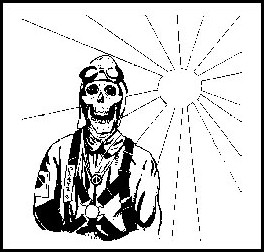
How to make a kamikaze pilot
The more and more information that is unearthed regarding World War II seems to do nothing other than to prove humanity’s potential for evil. This article is not intended to make readers depressed about our species, but World War II has proved time and time again that humans are not the angels we’d like to think we are. Recently, the manuals for training Japanese kamikaze pilots added to the evidence list.
The manual has been translated into English and is set to go on sale next month. Through the Internet, one can be allowed a preview into the systematic and all too level headed approach that the Japanese used in training their sacrificial lambs.
Being about the same age as most of the young Japanese kamikaze pilots, we can probably relate to how they must have felt in facing death at such a young age. However, the disgusting part of their situation was not that they died at the prime of their lives. The disgusting part was that they were not given a good preparation for the death they knew was coming. The Japanese military took advantage of the pilots’ lack of life experience and willingness to prove themselves in order to achieve its objectives, robbing its kamikaze pilots not only of years off of their life spans, but also of the informed consent in their choice to forfeit their lives for their country.
The kamikaze manual contains some brief descriptions on what might be happening in the racing emotions of the young men as they came face to face with both the enemy and their own death. However, brief is the key word. Most of the manual consists of a list of the disciplinary rules of a good fighting man and how to keep oneself in peak physical condition for the flight. What the manual does not offer is how one might cope with fear of dying or resentment at dying so young.
The manual even offers a description of the final flight with horrible precision. Of course the haunting question is: how do the writers of the manual know what goes on right before the kamikaze pilots nose dive into their target? The answer: they didn’t, but that didn’t stop the writers from making things up to give the pilots a false sense of security.
The manual didn’t prepare the pilots to die; it only gave them a check list to worry about so that they didn’t think about what they were intending to do.
The thing that has always puzzled me about kamikazes is how the military actually got the pilots to follow through with their plans.
It’s easy to say that you are ready to die and then when actually faced with death fold under the pressure and turn back. Any sane person with even a very strong will could do so, but most of the kamikaze pilots did as they intended.
Probably the most revolting part about the whole thing is that the manual lists those supposedly present as the pilots make their flights, including “every deity and the spirits of their dead comrades”. Though this horrifies me, it does make me understand the kamikaze mentality. The pilots weren’t crazy; they were just so afraid to fail that the thought of death seemed weak by comparison.
It would be nice if we could say that the kamikaze pilot was the product of a time of madness and humanity has progressed since then. No longer do people reach the point of insanity where they would sacrifice their own lives for the sole purpose of hurting or destroying a supposed enemy. Unfortunately, the events of less than a year ago have shattered any hope that the previous statement could be true. The participants of the September 11th attacks were simply new kamikaze pilots defending a different “Motherland”.
The kamikaze training manual offers us a glimpse into the mindset behind the suicide bombers that seem so prevalent today in the Middle East and even our own country. It is frightening, but not for the obvious reasons that one is inclined to assume.
It is not the loss of life and violence that are by-products of the acts, and it is not the illusion of freedom that the kamikazes were spoon fed by the very people who were to benefit from their brainwashed actions. To me, the eeriest part is that any of us could have acted in the same manner if put in similar conditions. We’d like to think that the kamikaze pilots and suicide bombers were insane, but in reality they were just human. It’s eery to think that decent human beings can be so easily manipulated into doing things that most normal people would consider atrocious.





