By Jessica Bellamy
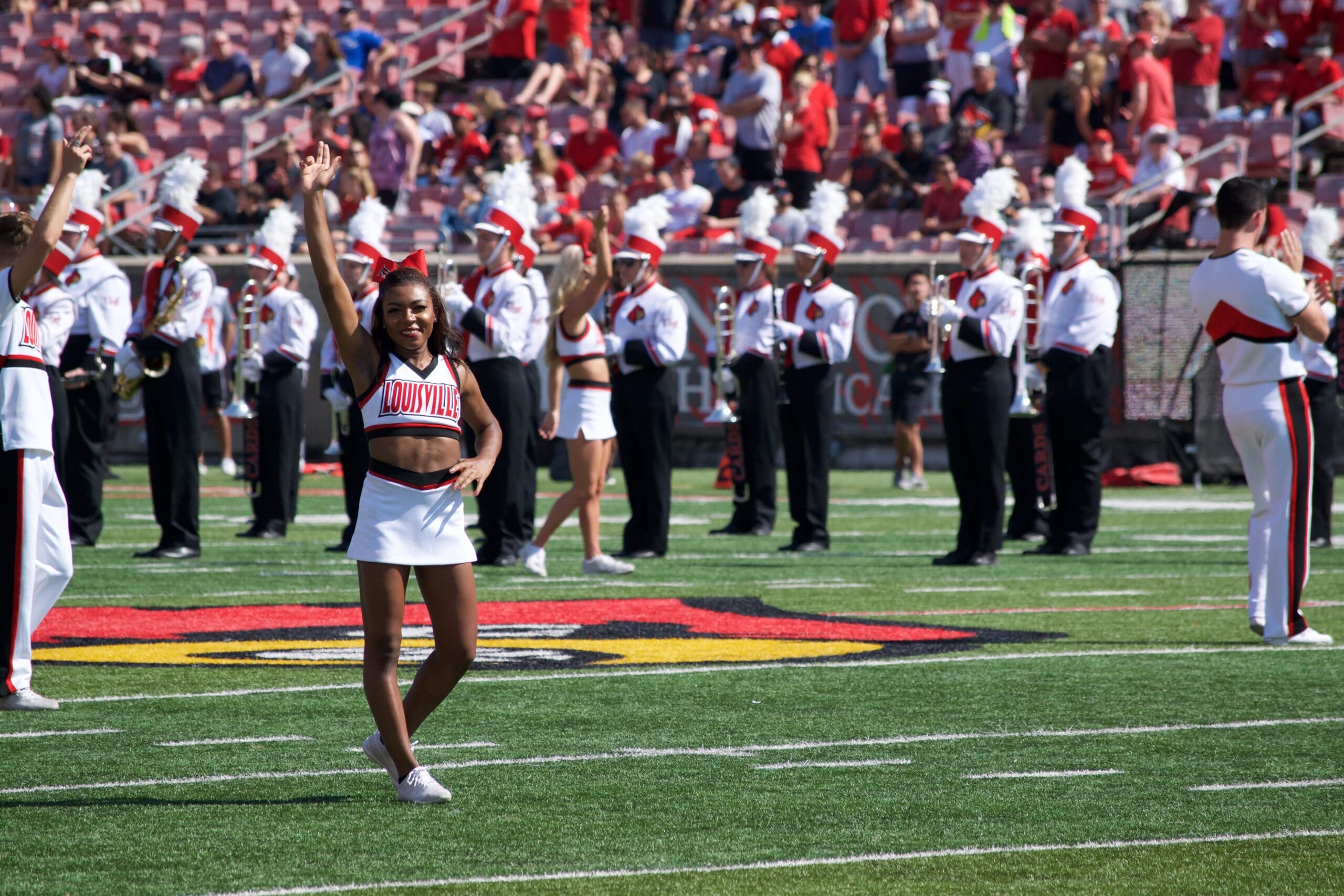
The University of Louisville cheerleading program has collected 48 National Cheerleading Association championships across its three competitive squads. Ask a student to name a single team member, and most will come up empty.
That gap sits at the center of a question that cheerleading families, former athletes and outside observers have been asking for years: how does a program rack up national titles and still struggle to earn a line in the athletic department budget?
Louisville’s three squads compete annually at the NCA championships. The Large Coed team, active for over 35 years, has won 18 NCA titles. The All-Girl team, founded in 1998 by coach Misty Hodges, has won 18 NCA championships of its own, including nine consecutive titles from 2014 through 2022. The Small Coed squad, created in 2004 to accommodate the program’s depth of talent, has added 12 more. The results are documented. The recognition, at home, is not.
Ella Daniels, whose daughter currently cheers at the high school level and has Louisville on her radar as a prospective school, said the recognition problem is familiar territory for cheer families.
“My daughter has been cheering since she was seven years old,” Daniels said. “The athleticism, the commitment, the physical demand all mirror what you’d see in a revenue sport. The support falls short of that standard. Parents and athletes are used to that. It still stings.”
Daniels said she researches program culture carefully when helping her daughter evaluate schools. A program’s championship record carries weight with her. So does how a university treats the athletes who build it.
The classification question looms large over everything. Cheerleading is not recognized as a varsity sport under the NCAA, which shapes how universities fund, staff, and discuss their programs. Louisville’s squads operate under the athletic department but compete without the formal sport designation that would unlock scholarship infrastructure, dedicated sports medicine staff, and the kind of media access that generates consistent coverage.
Mia Wharton, whose daughter competes for a Division I cheer program, has watched the classification debate from the college level for several years.
“Every season, you watch your kid train like a Division I athlete,” Wharton said. “Two-a-days, conditioning, choreography, stunts that require the same body awareness as gymnastics. Then you watch the university put out a press release about a team that finished third in its conference, and your kid wins a national title and gets a post on Instagram. That’s the reality.”
Wharton said her daughter’s cheer community relies heavily on itself for coverage, documentation, and celebration. Parents film, parents share, parents build the archive. The university shows up for the banner moments, less so for the work that produces them.
The pattern Wharton describes holds at Louisville. The cheerleading program’s NCA results appear in brief mentions when they occur, then fade from the institutional conversation. The football program’s season receives dedicated beat coverage, injury reports, and press conferences. A national title in cheerleading earns a social media post.
What makes the gap more striking is the profile of the athletes who fill it. Louisville’s program was founded in 1939 and has built a reputation the athletic department’s own website calls “the gold standard.” The Large Coed squad has been competing at the national level for more than 35 years under coach James Speed, who has led the program since 1990. The All-Girl team has won 19 of the last 23 available NCA titles. The Small Coed squad, the youngest of the three, added a dozen championships in under two decades. The athletes building that record train year-round, often without the training table access, sports psychology support, or academic advising priority that varsity athletes receive.
Daniels said she talks to her daughter about what to look for beyond a program’s trophy case.
“Winning is great, but I want to know: does the school show up for these kids? Are they in the game day program? Does the athletic department know their names? That matters to me as a parent,” Daniel said. “A championship banner means a lot more when the school that hung it actually invested in the people who earned it.”
Louisville’s cheerleading program built its reputation on competition floors, largely without the infrastructure that revenue sports consider standard. The 48 national championship titles are real. So is the question of whether the university that claims credit for them treats the program accordingly.
Wharton put it plainly.
“These programs win in spite of the system, not because of it. At some point, universities have to decide whether that’s something they’re proud of.”