By Josie Simpson
The U.S. Government’s funding will be cut off at the end of September unless Republican members of Congress can reach an agreement with Democratic members on a spending bill.
This could cause many U.S. government services to come to a halt.
Why do government shutdowns happen?
A shutdown happens when Congress fails to pass a spending bill for government services for the next fiscal year.
In this case, Republicans hold the majority in Congress, but they lack the 60 Senate votes needed to overcome a filibuster.
Therefore, Democrats have some leverage. They are pushing for concessions on issues like healthcare, child tax credits and domestic programs in exchange for their support on the spending bill.
When will the shutdown happen?
At 12:01 a.m. on Oct. 1, the shutdown will begin if the bill does not get the 60 Senate votes needed.
This will be the first shutdown since 2019. This shutdown lasted for 35 days, from Dec. 22 to Jan. 25, 2019, during President Trump’s first term.
President Trump met with all four congressional leaders on both sides of the aisle on Sept. 29. However, news reports say the meeting produced no agreement and Trump expressed uncertainty about a resolution.
The likelihood of a shutdown appears to be very high.
How could this affect the University of Louisville?
Universities are somewhat insulated from a shutdown. However, a prolonged shutdown could lead to more significant disruptions in research, new grant applications, and certain student services.
How could this affect Kentucky workers & businesses?
Kentucky has approximately 23,449 federal employees. During a shutdown, these employees either work without pay until funding is restored or are temporarily put on leave.
Non-essential federal employees are not permitted to work during a shutdown.
Essential federal employees must continue working, but do not receive pay until after the shutdown ends. Essential workers include: active-duty military, law enforcement, TSA and air traffic controllers, VA hospital doctors & nurses, and Weather Service forecasters.
All affected employees will receive back pay once government re-opens.
A longer shutdown, however, can slow economic activity across the state, with ripple effects on small businesses, restaurants and local communities.
How could this affect Kentucky healthcare?
Kentucky is one of the most highly dependent states on federal funding for Medicaid. A shutdown could shift costs to the state budget. While Medicaid eligibility will not change during a shutdown, delays in federal reimbursements could strain Kentucky’s state budget.
This will cause financial stress for hospitals, especially in rural communities. Rural hospitals in Kentucky are already vulnerable and a prolonged shutdown could increase pressure on them.
How could this affect Kentucky nonprofits, social services & food assistance?
Many nonprofits in Kentucky rely on federal grants and contracts. For example, Dare to Care reports that the U.S. Department of Agriculture supplies more than 25% of the food it distributes. USDA program disruptions would affect its supply chain.
If aid is delayed or cut, shelters and social services may be forced to reduce support.
How could this affect Kentucky’s infrastructure?
A freeze of federal grants would hit state road and bridge projects. The Transportation Cabinet, which maintains highways like I-65, depends on federal funding.
Kentucky budget choices and fiscal pressure
Kentucky is highly dependent on federal revenue compared to other states. When money is delayed, the state may delay projects, use reserves or reallocate resources until funding is restored.
Uncertainty will hurt the economy through reduced consumer spending, slow investments, and delayed services from laborers who will not get paid on time.
What will continue?
“Mandatory” programs like Social Security and Medicare will continue.
Whether the effect on Kentucky is large or small depends on the duration and scope of the shutdown.
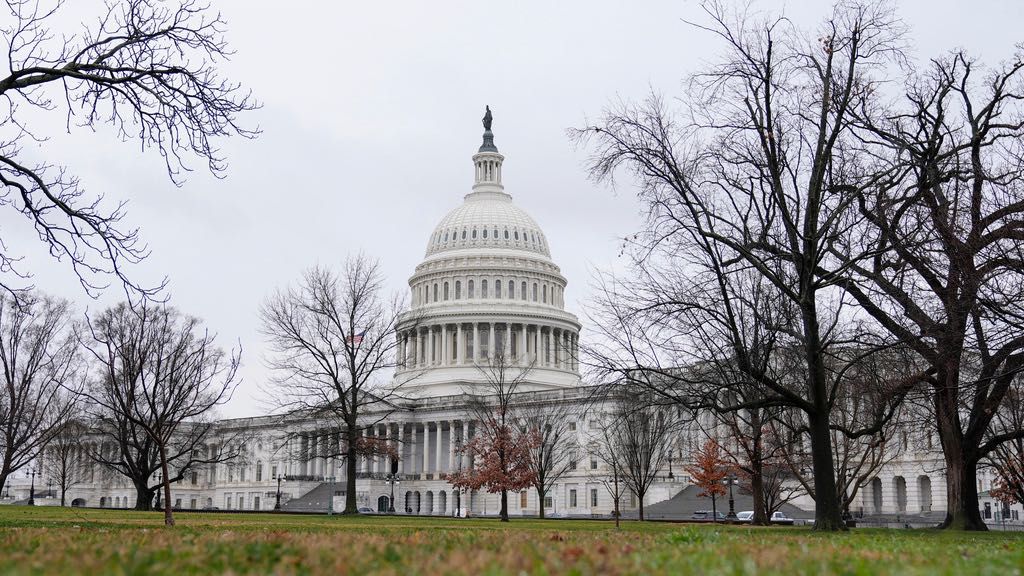
Photo by Mariam Zuhaib/AP