By Beth Przybylski
With study, research, internship and service-learning opportunities around the world, the University of Louisville’s Office of Education Abroad may be the right spot for students looking to enhance their college experience and stand out on job applications.
Here’s a rundown of what the office has to offer.
Types of support
Students receive financial support from both the Office of Education Abroad and the programs themselves, covering every part of their experience, including courses, housing, visas and financial aid.
While overseas, students continue to have access to U of L resources. After returning, the office assists with credit transfers and can also help students plan future trips.
Kurt Olausen, the director of education abroad, said that overall, students are pleased with the process.
“Most students say that studying abroad was the highlight of their college years,” Olausen said. “Many others mention they wish they could have taken advantage of study abroad opportunities while they were in school. It’s clear that studying abroad can be a life-changing experience for everyone who participates.”
Despite the positive feedback, he said many students worry about affording the travel. Their concerns, however, may not be as big an issue as they think.
“Sometimes it’s more perception than reality. Many programs cost the same as, or less than, a semester on campus, and most financial aid travels with students,” said Olausen. “If you can afford to be at U of L, you can afford to study abroad somewhere.”
There are also summer programs, but he says “they can present their own challenges” for some students.
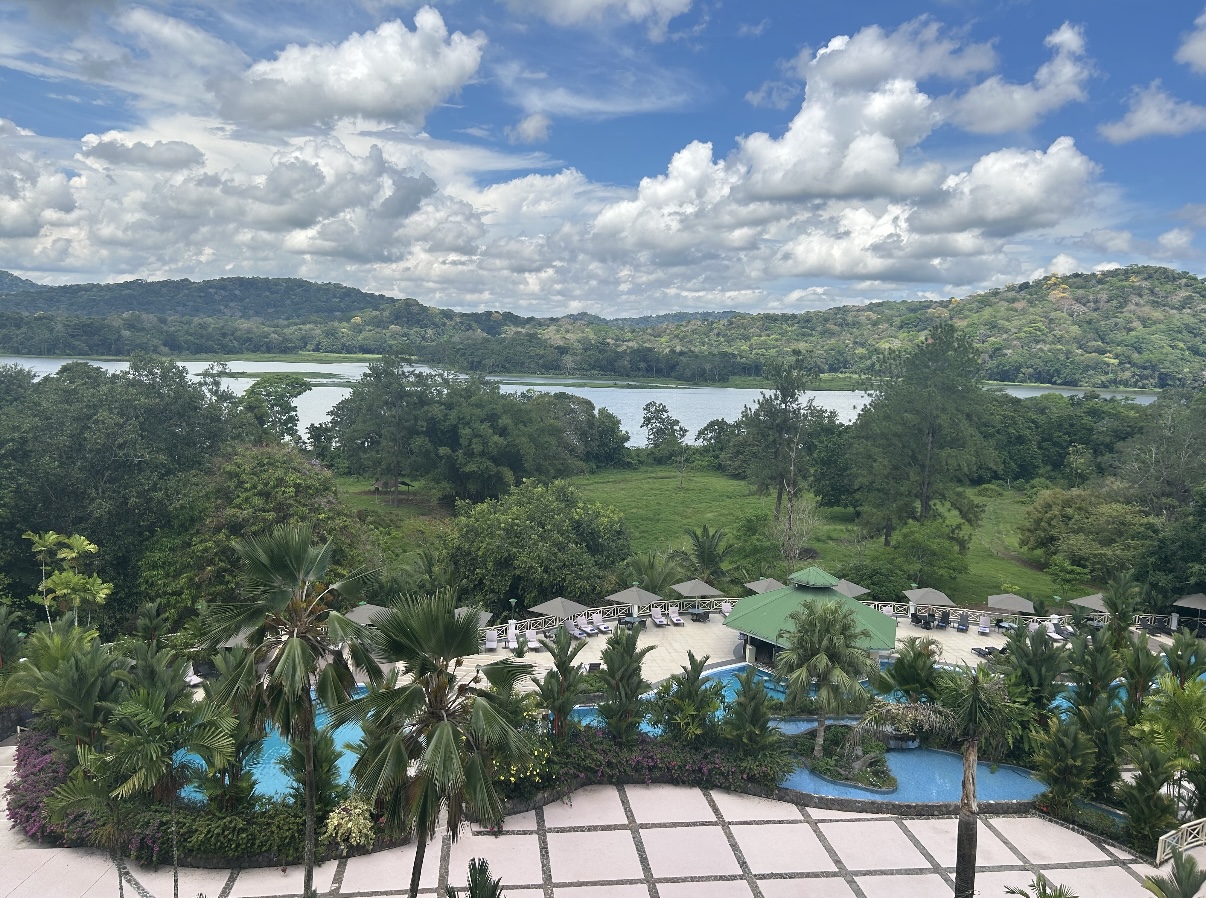
The scenery of Colon, Panama. (Photo courtesy / Ofelia Mattingly)
Preparing students for cultural adjustments and safety
“All students are required to attend a pre-departure orientation before studying abroad,” Olausen said. “The orientation covers topics such as culture shock, safety and resources available both in their host countries and here at U of L.”
Students can also download an app called AlertTraveler, which provides updates on potential issues while traveling.
“This could include anything from a bus drivers’ strike, a political demonstration, a flu outbreak or a natural disaster,” he said. “The office can monitor the app and send messages or check-ins to students as needed.”
“In addition, every student is enrolled in an international insurance plan that covers nearly any type of emergency abroad and provides 24-hour assistance by phone, email or text.” Olausen said.
To pick their destination, students are paired with programs during advising appointments, where they discuss what matters most to them, including location, course offerings, timeframe and cost.
He encourages students to start exploring their options and reach out for guidance early, noting that studying abroad is more attainable than many realize.
Overall Impact of Studying Abroad
According to Olausen, studying abroad expands students’ perspectives and changes the way they see the world.
Ofelia Mattingly a political science major and study abroad peer ambassador has traveled to Spain and Panama. She described her time abroad as a culturally enriching experience.
“In Panama, the most memorable experience was when I got to go to the Emberá Village. The Emberá are an Indigenous group, and being able to see what their culture is like was very cool,” said Mattingly.
She said the experiences made her more interested in international politics and research.
“Studying abroad really broadened my horizons and made me see things from a non-U.S. perspective, which I feel is important in politics. It also made me think critically about the world and the U.S.,” Mattingly said.
Morgan Howard, another peer ambassador, is a nursing major with a minor in communication. She studied in Madrid, Spain in summer 2025.
“Studying abroad made me realize how big the world is. It taught me patience, flexibility and the importance of approaching new things with an open mind,” Howard said. “It made me more confident in my ability to adapt, which I will carry into my nursing career.”

The town of Tossa de Mar, Spain. (Photo courtesy, Ofelia Mattingly)
“I will never forget traveling to Alicante [Spain] and watching the sunrise over the Mediterranean Sea on an empty beach,” Howard said. “Being in the water and watching the sky slowly turn pink and gold felt surreal. It was peaceful, quiet, and made me realize how lucky I was to experience a moment like that.”
Howard says her time abroad taught her to adapt to unfamiliar environments and teaching styles.
“It made me more confident in pursuing opportunities outside of my comfort zone.”
Contact Information
The office of education abroad is located in Jouett Hall and be contacted through phone, 502-852-0374, or email, edabroad@louisville.edu.
Students can request and appointment or visit the office during the walk-in hours are listed below.
Monday and Friday: 1:30 to 4 p.m.
Tuesday: 10:30 a.m. to 12 p.m. and 1:30 to 4 p.m.
Wednesday: 3 to 5 p.m.
Thursday: 10 a.m. to 12 p.m.
Photo courtesy / Ofelia MAttingly