 By Michelle Renee Dubey
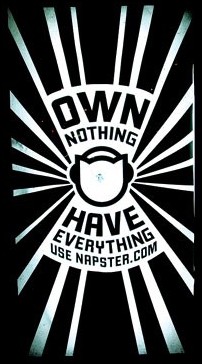
Now that you have your new iPod, which stores as many as 15,000 songs, what’s the harm in downloading a few songs from the Internet to round out your collection? In this era of the digital music revolution, the modern-day pirate cruises the Internet in search of bounty, minus such familiars as black flags, swords and swashbuckling. The pirate’s code, however, remains the same: why pay for something that can be so easily taken?
Despite recent legislation and pleas by musicians, online music piracy continues to thrive. Many record labels are hoping to curb the trend from free music to cheap music, using the Internet to promote their music by offering free samples.
Programs like iTunes, managed by Apple, have entered into the online music industry legally by offering single-song downloads for the price of $.99 a song. This alternative to piracy can be less expensive than buying an entire CD and it comes without the risks that online music piracy can have for the online listener.
Phillip, who heads the local independent record label Geekcore Records, has mixed feelings about online music piracy. “On one hand it is taking away potential sales, but it also helps get new music out there.”
The Recording Industry Association of America (RIAA) identifies four specific categories of music piracy: pirate recordings, counterfeit recordings, bootleg recordings and online piracy.
Pirate recordings constitute the unauthorized duplication of only the sound of legitimate recordings (i.e. mixed tapes or compilations). Counterfeit recordings not only duplicate the sound, but also the original artwork, label, trademark and packaging. Bootleg recordings are the unauthorized recordings of live concerts and broadcasts on radio or television.
Online piracy, boasting the highest number of offenders by far, constitutes the unauthorized uploading of a copyrighted recording and making it available to the public via an Internet site, or downloading an unauthorized recording from an Internet site.
Musicians such as Metallica, along with the RIAA and the AFM, have advocated for legislation that would counter online music piracy.
Legislation such as the Piracy Deterrence and Education Act of 2003 counters online music piracy by attacking the individuals who participate in illegal peer-to-peer file sharing networks like KaZaA or Grokster. Under this legislation individuals who participate in online music piracy would risk being prosecuted for downloading music.
Many students who find it difficult to manage budgets even for such essentials as food find online music piracy to be an alternative to the often high prices charged in record stores. Anyone who has seen an episode of “Cribs” could argue that musicians make millions of dollars, so there is little harm in downloading a few songs. The American Federation of Musicians (AFM), however, estimates that online music piracy has caused as much as a 20 percent drop in record store sales.
“I like to try out new artists before I commit to buying an entire CD,” said Erin Grumley, a student at Centre College. “I download a lot of songs, but I still buy a lot of CDs, too.”